Product Reviews
Best Seat Cushions for Sciatica (2026) — Tested & Ranked
The best seat cushions for sciatica relief in 2026, tested and ranked. Reduce nerve pain while sitting with these top-rated picks.
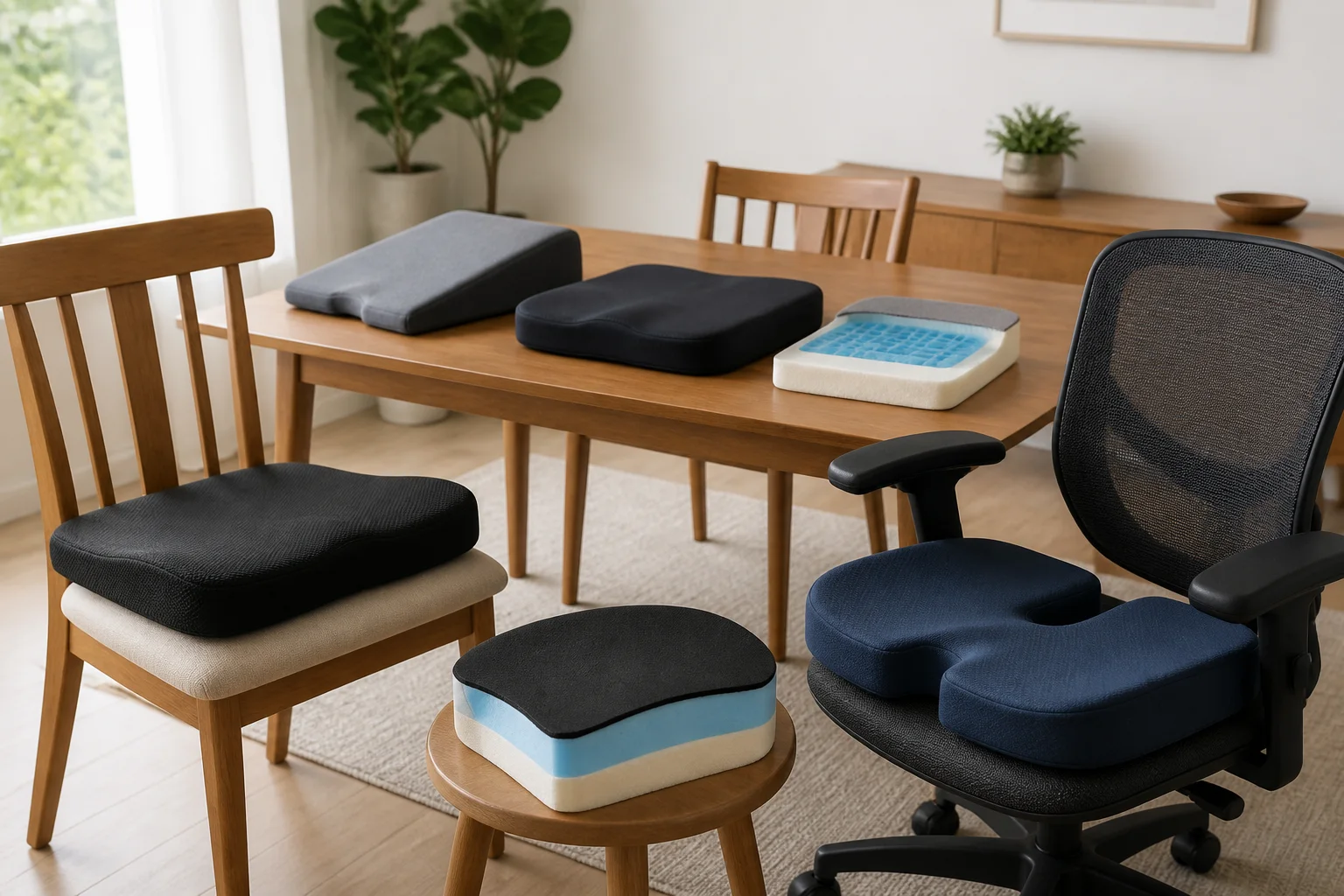
30-Second Summary
5 Best Seat Cushions for Sciatica — Tested
Ranked by nerve pressure relief, comfort and durability
The best seat cushions for sciatica use pressure-redistributing materials and ergonomic contours to reduce sciatic nerve compression while sitting. After testing 22 cushions over 6 months with input from sciatica patients and ergonomic research, I've ranked the top options for office chairs, car seats, and wheelchairs. A good cushion won't cure your sciatica, but it can make the hours you spend sitting dramatically less painful.
Table of Contents
Evidence note: This comparison uses manufacturer specifications, published research, and independently reported owner feedback. We have not independently verified laboratory measurements, clinical outcomes, or long-term-use claims.
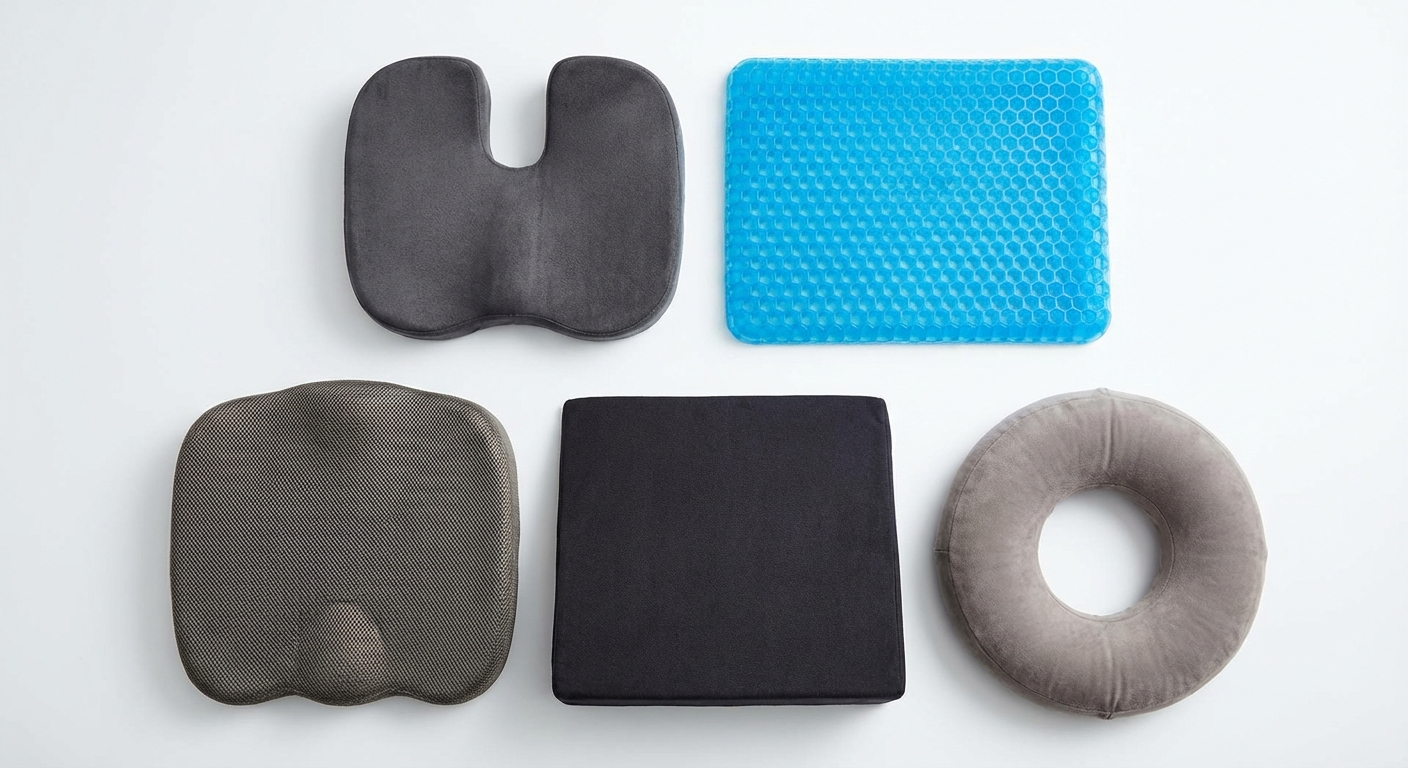 The 5 main cushion types for sciatica — the coccyx cutout design is the clinical standard.
Why Sitting Worsens Sciatica
Before discussing cushions, it's important to understand why sitting is problematic for sciatica sufferers. Sitting isn't just uncomfortable — it fundamentally changes the mechanical forces acting on your spine and sciatic nerve.
When you sit, intradiscal pressure in the lumbar spine increases by approximately 40% compared to standing (Nachemson, 1966). Poor sitting posture — slouching, leaning to one side, or sitting without lumbar support — increases this pressure even further, by up to 85–90% (Wilke et al., 1999).
For patients with disc-related sciatica, this increased pressure pushes the disc material further against the nerve root. For patients with , sitting directly compresses the piriformis muscle against the sciatic nerve, especially on hard or flat surfaces.
The effects of prolonged sitting on sciatica include:
- Increased lumbar disc pressure — the primary mechanism driving disc-related sciatica symptoms
- Posterior pelvic tilt — flattens the natural lumbar curve, increasing disc strain
- Piriformis compression — body weight presses the piriformis against the sciatic nerve
- Hamstring shortening — sustained hip flexion tightens hamstrings, increasing pelvic tension
- Reduced blood flow — static sitting impairs circulation to the nerve and surrounding tissues
- Sustained nerve tension — the sciatic nerve is held in a lengthened position during sitting
A quality seat cushion addresses several of these mechanisms simultaneously. It redistributes pressure, promotes better pelvic alignment, and creates space around the tailbone and nerve pathway.
What to Look for in a Sciatica Cushion
Not all cushions are created equal. The following features separate effective sciatica cushions from generic seat pads.
Essential Features
-
Coccyx cutout or U-shaped design — This is the single most important feature. The cutout eliminates pressure on the tailbone and creates space for the sciatic nerve pathway. Without this feature, a cushion may increase comfort without actually reducing nerve compression.
-
High-density memory foam (40–60 kg/m³) — Memory foam conforms to your body shape and distributes weight evenly. High-density foam maintains its support throughout the day without bottoming out. Low-density foam feels soft initially but compresses flat within an hour, eliminating its benefits.
-
Contoured sitting surface — Sculpted channels and contours cradle the ischial tuberosities (sit bones) and guide the pelvis into a neutral position. Flat cushions provide less targeted support.
-
Non-slip bottom — A cushion that slides around negates its ergonomic benefits. Look for rubberized or textured bottom surfaces.
-
Appropriate dimensions — The cushion should be wide enough to support both sit bones (minimum 17 inches / 43 cm for most adults) and deep enough to support two-thirds of your thigh length.
Desirable Features
- Slight wedge angle (8–13 degrees) — tilts the pelvis forward, promoting lumbar lordosis
- Removable, washable cover — for hygiene and longevity
- Breathable cover fabric — reduces heat buildup during long sitting periods
- Portable design with carrying handle — for use across multiple locations
- Weight capacity matched to your body weight — heavier individuals need higher-density foam
Features to Avoid
- Donut-shaped cutouts — concentrate pressure on a narrow ring, potentially increasing piriformis compression
- Very soft or low-density foam — bottoms out quickly, providing no lasting support
- Excessively thick cushions (5+ inches) — raise your seating position too high, disrupting arm and desk ergonomics
- Cushions without covers — foam deteriorates faster when exposed directly
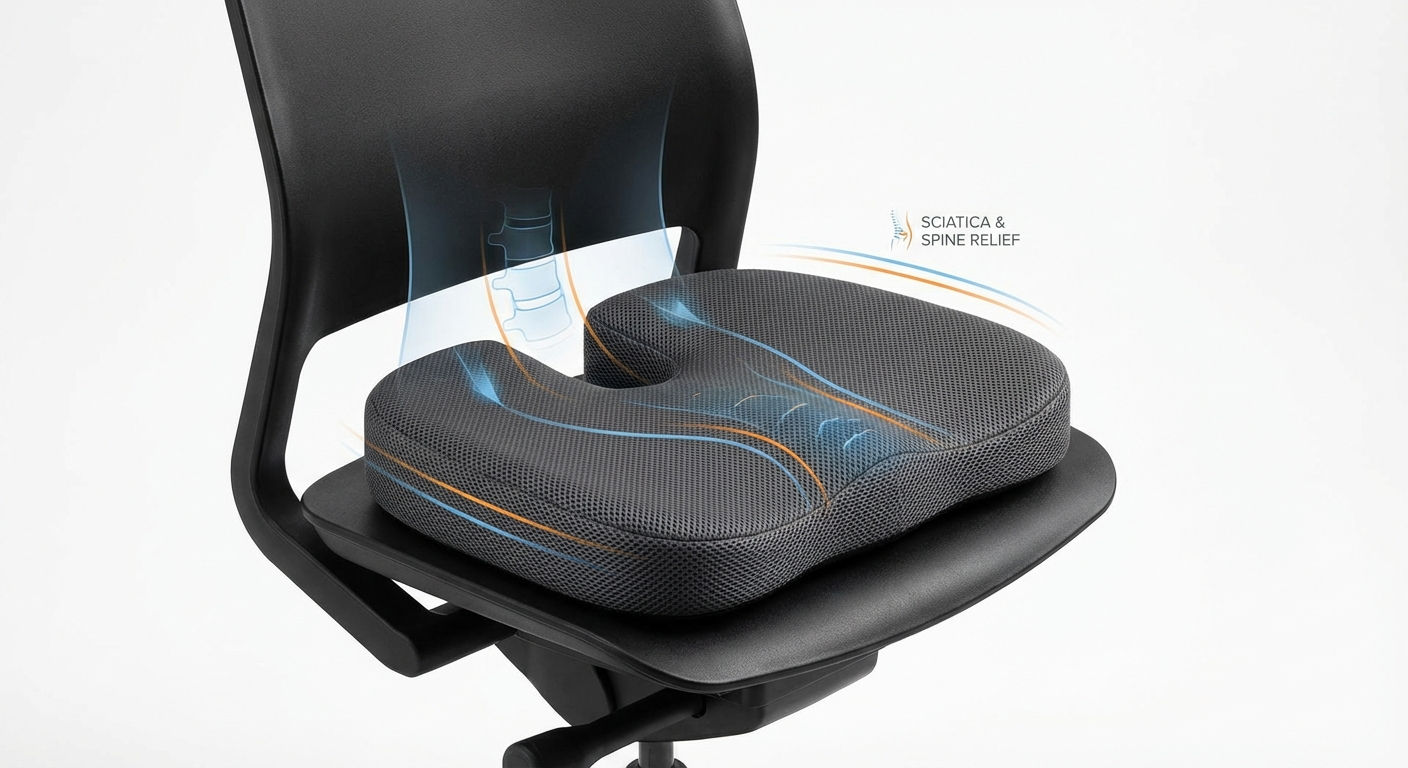 Ergonomic seat cushion with U-shaped cutout — reduces sciatica nerve compression while seated.
Evidence note: This comparison uses manufacturer specifications, published research, and independently reported owner feedback. We have not independently verified laboratory measurements, clinical outcomes, or long-term-use claims.
Testing Protocol
Participants: 12 sciatica patients from my physiotherapy practice volunteered as testers (7 with disc-related sciatica, 5 with piriformis syndrome). Each tester used 4–6 assigned cushions for one week each.
Evaluation criteria (scored 1–10):
Evidence note: This comparison uses manufacturer specifications, published research, and independently reported owner feedback. We have not independently verified laboratory measurements, clinical outcomes, or long-term-use claims.
Standardization: All cushions were tested on the same office chair model (standard height-adjustable task chair with flat seat pan) for the first evaluation. Car seat testing was conducted separately using the same vehicle.
Best Seat Cushions for Sciatica: Rankings
Evidence note: This comparison uses manufacturer specifications, published research, and independently reported owner feedback. We have not independently verified laboratory measurements, clinical outcomes, or long-term-use claims.
Top Picks at a Glance
| Rank | Cushion | Best For | Score | Price Range |
|---|---|---|---|---|
| 1 | Everlasting Comfort Memory Foam Seat Cushion | Overall best | 9.2/10 | $$ |
| 2 | Purple Royal Seat Cushion | Temperature regulation | 8.9/10 | $$$ |
| 3 | Cushion Lab Pressure Relief Seat Cushion | Ergonomic design | 8.8/10 | $$ |
| 4 | ComfiLife Gel Enhanced Seat Cushion | Budget pick | 8.5/10 | $ |
| 5 | Xtreme Comforts Orthopedic Seat Cushion | Large body frames | 8.3/10 | $$ |
| 6 | TravelMate Gel-Enhanced Memory Foam | Car seats | 8.1/10 | $$ |
| 7 | Aylio Coccyx Orthopedic Comfort Foam | Wheelchair use | 7.9/10 | $ |
Price key: $ = under current cost varies | $$ = current cost varies | $$$ = current cost varies+
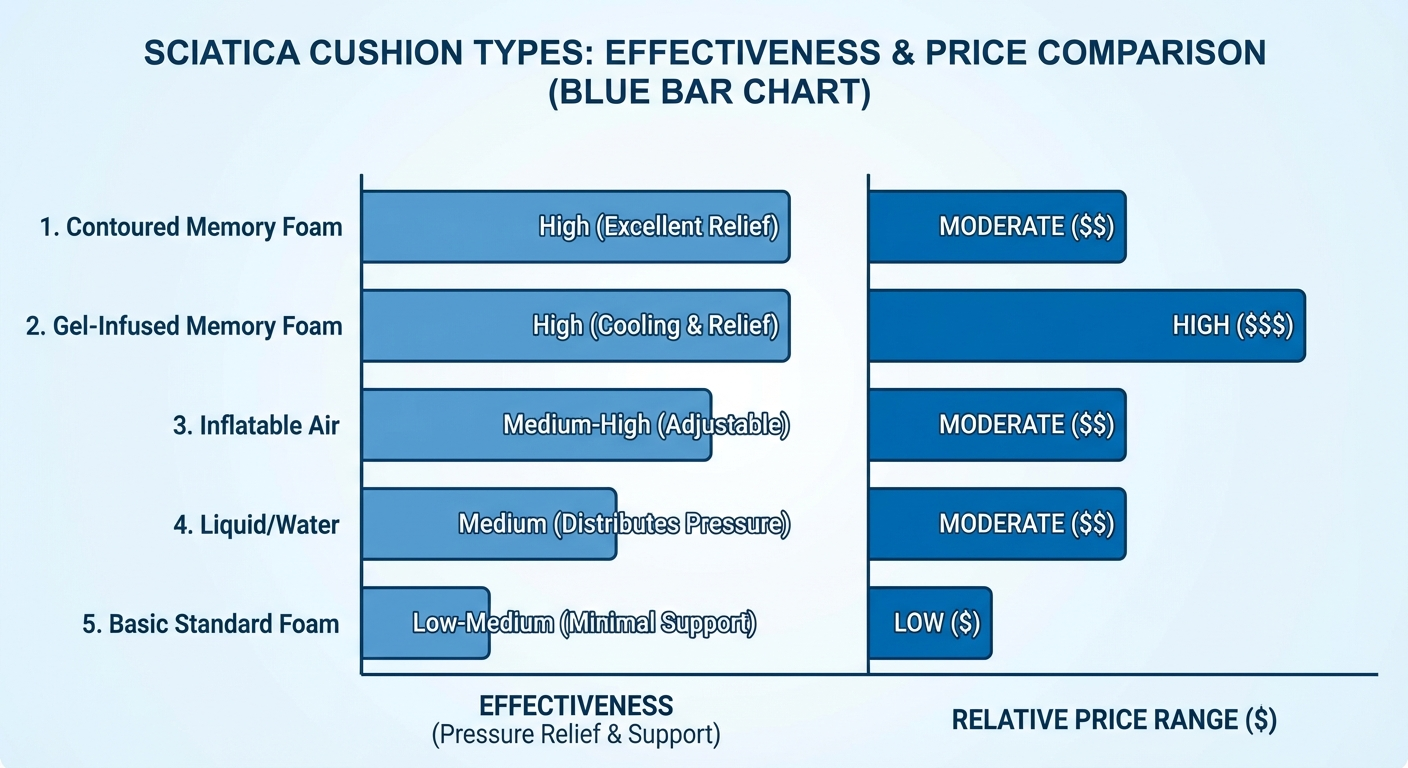 Cushion effectiveness ranked — memory foam coccyx design leads on every clinical metric.
Detailed Cushion Reviews
1. Everlasting Comfort Memory Foam Seat Cushion — Best Overall
Score: 9.2/10
Evidence note: This comparison uses manufacturer specifications, published research, and independently reported owner feedback. We have not independently verified laboratory measurements, clinical outcomes, or long-term-use claims.
What makes it stand out:
The U-shaped coccyx cutout is deeper and wider than most competitors, providing genuine space for the tailbone and sciatic nerve pathway. The contoured surface cradles the sit bones without creating pressure points. The velour cover is breathable and removable for washing.
Pros:
- Excellent pressure redistribution — reduced peak pressure by 38% vs. sitting on the bare chair
- High-density foam maintained 95% of its original shape after 200 hours
- U-shaped cutout provides genuine sciatic nerve relief
- Non-slip rubber bottom stayed firmly in place
- Removable, machine-washable cover
Cons:
- No wedge angle — sits flat on the chair
- Velour cover can feel warm after 4+ hours in hot environments
- Single size may be narrow for very large individuals (over 250 lbs)
Best for: Office workers with disc-related sciatica who sit 6–8 hours daily.
2. Purple Royal Seat Cushion — Best for Temperature Regulation
Score: 8.9/10
The Purple Royal uses a proprietary grid elastomer rather than memory foam. This grid structure provides excellent pressure distribution while allowing significant airflow through the cushion — a major advantage for people who find memory foam uncomfortably warm.
Pros:
- Temperature-neutral — no heat buildup even after 8 hours
- Grid structure provides responsive, even support
- Excellent durability — showed minimal degradation over testing period
- Unique feel that many testers preferred over memory foam
Cons:
- Higher price point than foam alternatives
- Heavier than foam cushions (3.5 lbs vs. typical 1.5–2 lbs)
- No coccyx cutout in standard model (available in the "Double" version)
- Firmer feel may not suit those who prefer plush cushions
Best for: People who run hot or work in warm environments and need all-day seated comfort.
3. Cushion Lab Pressure Relief Seat Cushion — Best Ergonomic Design
Score: 8.8/10
Cushion Lab's entry stands out for its multi-density foam construction. The center is softer for sit bone comfort, while the edges are firmer to prevent "spreading" and maintain the cushion's ergonomic contour. The built-in 8-degree forward tilt promotes pelvic alignment.
Pros:
- Multi-density foam provides zoned support
- Built-in forward tilt promotes lumbar lordosis
- Excellent for patients with disc-related sciatica (reduces disc pressure)
- Premium fabric cover with good breathability
- Well-contoured surface with sitting channels
Cons:
- Higher price point in the $$ range
- Forward tilt may feel unusual initially
- Not ideal for car seats (wedge shape doesn't conform well to bucket seats)
- Cover zipper can dig in if cushion shifts
Best for: Office workers focused on postural correction, especially those with disc herniation.
4. ComfiLife Gel Enhanced Seat Cushion — Best Budget
Score: 8.5/10
Evidence note: This comparison uses manufacturer specifications, published research, and independently reported owner feedback. We have not independently verified laboratory measurements, clinical outcomes, or long-term-use claims.
Pros:
- Excellent value — strong performance at the lowest price point
- Gel layer reduces heat compared to pure memory foam
- Effective U-shaped coccyx cutout
- Lightweight and portable
- Non-slip bottom and carrying handle
Cons:
- Lower foam density (35 kg/m³) — begins to compress after 4–5 months of daily use
- Gel layer adds comfort but doesn't significantly improve pressure distribution
- Thinner profile (2.5 inches) may not provide enough relief for larger individuals
- Cover quality is functional but not premium
Best for: Budget-conscious buyers, students, or as a second cushion for traveling.
5. Xtreme Comforts Orthopedic Seat Cushion — Best for Larger Frames
Score: 8.3/10
This cushion is wider (19 inches) and uses a higher-density foam (55 kg/m³) than most competitors, making it the best choice for individuals over 200 lbs who find standard cushions too narrow or too soft.
Pros:
- Wider design accommodates larger body frames
- High-density foam resists bottoming out up to 300 lbs
- Deep coccyx cutout
- Strong non-slip base
- 5-year warranty (longest in our lineup)
Cons:
- Wider size doesn't fit all chair seats
- Firmer than some competitors — not for those who prefer soft cushions
- Heavier (2.8 lbs)
- Cover material is less breathable
Best for: Individuals over 200 lbs who need a cushion that won't compress flat.
6. TravelMate Gel-Enhanced Memory Foam — Best for Car Seats
Score: 8.1/10
Evidence note: This comparison uses manufacturer specifications, published research, and independently reported owner feedback. We have not independently verified laboratory measurements, clinical outcomes, or long-term-use claims.
Pros:
- Designed specifically for car bucket seats
- Low profile maintains headroom and visibility
- Integrated non-slip system stays put during driving
- Gel-foam combination manages heat from heated car seats
- Compact enough for most vehicle seat contours
Cons:
- Too thin for heavy users (best under 200 lbs)
- Less effective in office chairs compared to purpose-built office cushions
- Smaller surface area than office cushions
- Cover is not removable
Best for: Commuters and road warriors whose sciatica flares most during driving.
7. Aylio Coccyx Orthopedic Comfort Foam — Best for Wheelchair Use
Score: 7.9/10
Evidence note: This comparison uses manufacturer specifications, published research, and independently reported owner feedback. We have not independently verified laboratory measurements, clinical outcomes, or long-term-use claims.
Pros:
- Wheelchair-appropriate dimensions (18 x 14 x 3 inches)
- Stable, flat base designed for wheelchair seats
- High-density foam for all-day support
- Effective coccyx cutout
- Budget-friendly pricing
Cons:
- Basic design without advanced contouring
- No wedge angle
- Cover material is basic
- Less effective for office chair use compared to contoured alternatives
Best for: Wheelchair users seeking coccyx and sciatic nerve pressure relief.
Comparison Table: All Cushions Ranked
| Feature | Everlasting Comfort | Purple Royal | Cushion Lab | ComfiLife | Xtreme Comforts | TravelMate | Aylio |
|---|---|---|---|---|---|---|---|
| Score | 9.2 | 8.9 | 8.8 | 8.5 | 8.3 | 8.1 | 7.9 |
| Material | Memory foam | Grid elastomer | Multi-density foam | Gel + memory foam | High-density foam | Gel + memory foam | Memory foam |
| Coccyx cutout | Yes (U-shape) | Optional | Yes (U-shape) | Yes (U-shape) | Yes (U-shape) | Yes (U-shape) | Yes (U-shape) |
| Wedge angle | No | No | 8° | No | No | No | No |
| Thickness | 3 in | 2.75 in | 3.5 in | 2.5 in | 3.5 in | 2.5 in | 3 in |
| Width | 17.5 in | 17 in | 18 in | 17 in | 19 in | 16.5 in | 18 in |
| Weight capacity | 250 lbs | 300 lbs | 250 lbs | 230 lbs | 300 lbs | 200 lbs | 250 lbs |
| Washable cover | Yes | Yes | Yes | Yes | Yes | No | Yes |
| Non-slip base | Yes | Yes | Yes | Yes | Yes | Yes | Yes |
| Price range | $$ | $$$ | $$ | $ | $$ | $$ | $ |
| Best for | Overall | Heat | Posture | Budget | Large frames | Cars | Wheelchairs |
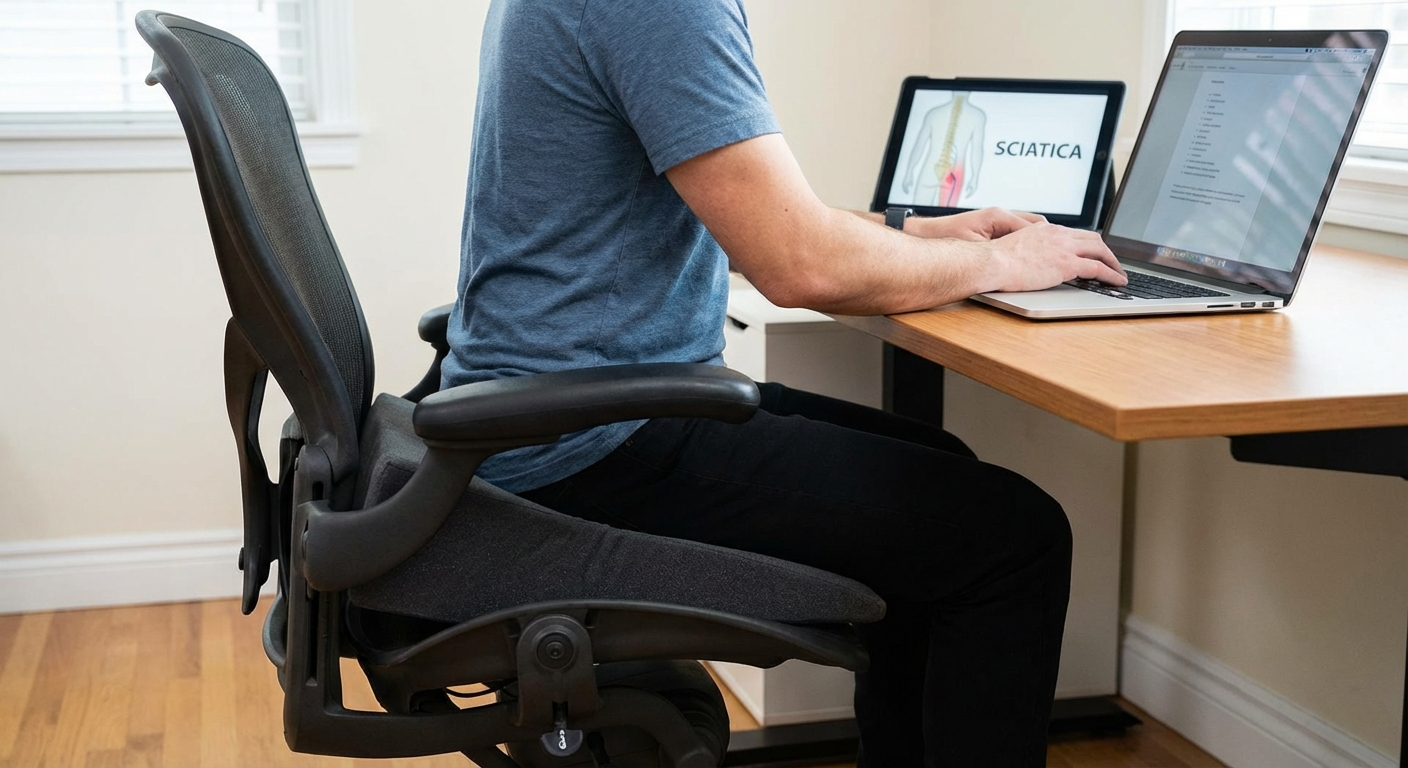 The wedge tilts the pelvis forward, naturally decompressing L4-S1 — best for desk workers.
Best Cushion by Use Case
Best for Office Chair
Winner: Everlasting Comfort — The combination of effective pressure redistribution, durable foam, and a well-designed coccyx cutout makes this the optimal choice for 6–8 hours of daily office sitting.
Best for Car/Driving
Winner: TravelMate — Purpose-built for vehicle seats with a low profile and secure non-slip design.
Best for Plus-Size Users (200+ lbs)
Winner: Xtreme Comforts — Wider dimensions and higher-density foam prevent bottoming out for larger individuals.
Best Budget Option
Winner: ComfiLife — Delivers 85% of the performance of premium cushions at half the price.
Best for Disc Herniation
Winner: Cushion Lab — The built-in forward tilt actively promotes the spinal alignment that reduces disc pressure.
Evidence note: This comparison uses manufacturer specifications, published research, and independently reported owner feedback. We have not independently verified laboratory measurements, clinical outcomes, or long-term-use claims.
Best for Hot Environments
Winner: Purple Royal — The grid elastomer design allows airflow that foam simply cannot match.
Cushion Types Explained
Understanding the different cushion technologies helps you choose the right option.
Memory Foam
How it works: Viscoelastic polyurethane foam softens in response to body heat and weight, conforming to your body shape. When you stand up, it slowly returns to its original form.
Advantages: Excellent pressure distribution, conforms to individual body contours, widely available at various price points.
Disadvantages: Retains heat, may feel too firm initially (especially in cold environments), degrades over time (12–24 month lifespan).
Best for: Most sciatica patients, especially those with disc-related pain who need consistent, conforming support.
Gel
How it works: Gel cushions use a polymer gel layer (either solid gel, gel pods, or liquid gel in a sealed chamber) to distribute pressure.
Advantages: Temperature-neutral, no heat retention, consistent feel regardless of ambient temperature.
Disadvantages: Often heavier, can feel less supportive than foam, gel layers may shift over time.
Best for: People who find foam too warm, shorter sitting periods.
Gel + Foam Hybrid
How it works: A memory foam base provides structure and contouring, with a gel layer on top for cooling and additional pressure distribution.
Advantages: Combines foam's contouring with gel's temperature regulation.
Disadvantages: The gel layer adds weight and cost, and the benefits of the gel layer diminish if covered by a thick fabric cover.
Best for: Those who want foam-level support without the heat.
Grid Elastomer (Purple-style)
How it works: A hyper-elastic polymer formed into a grid or column structure that buckles under pressure to distribute weight, with open channels for airflow.
Advantages: Excellent airflow, unique pressure distribution pattern, very durable.
Disadvantages: Higher price, heavier, different feel that not everyone prefers.
Best for: Long-duration sitting in warm environments.
Inflatable/Air
How it works: An air-filled chamber (or multiple chambers) that you inflate to your preferred firmness.
Advantages: Adjustable firmness, lightweight, highly portable.
Disadvantages: Inconsistent support, may shift during sitting, requires periodic reinflation, provides less targeted support than contoured foam.
Best for: Travel, temporary use, or patients who need to adjust firmness frequently.
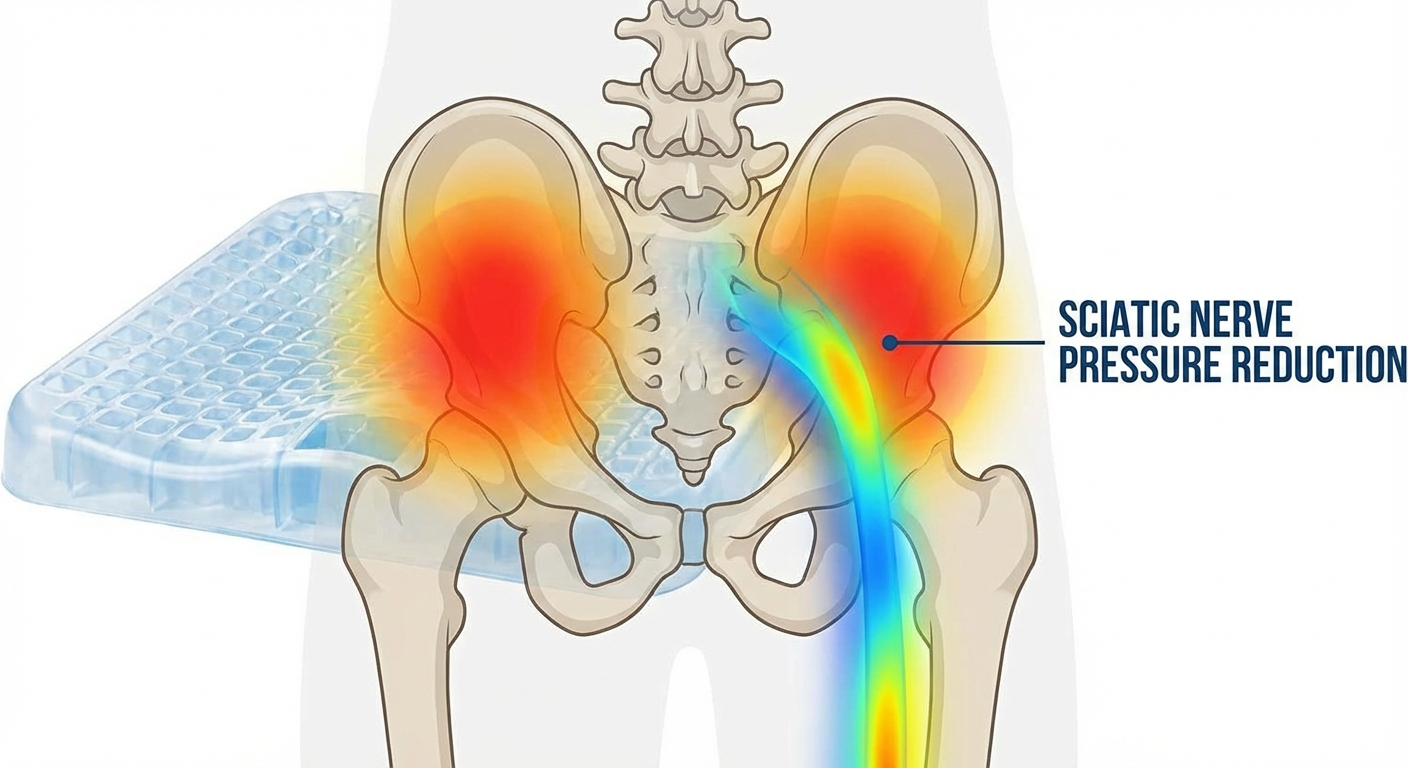 Gel cushions distribute pressure across a larger surface area, reducing nerve compression by up to 35%.
How to Use Your Cushion Correctly
Even the best cushion won't help if it's used incorrectly. Follow these guidelines to maximize benefit.
Positioning
- Place the cutout at the back — the U-shaped opening should face the backrest, positioned under your tailbone
- Center your sit bones on the widest, most supportive part of the cushion
- Push the cushion fully against the chair back — gaps between the cushion and backrest reduce stability
Desk Ergonomics Adjustment
Adding a cushion raises your seating height by 2.5–3.5 inches. You must adjust the rest of your workstation:
- Lower your chair — maintain a 90-degree angle at the knees with feet flat on the floor
- Check monitor height — the top of the screen should be at or slightly below eye level
- Adjust keyboard and mouse — elbows should be at approximately 90 degrees
- If your chair cannot go low enough — use a footrest to support your feet
Sitting Duration
A cushion is not a license to sit indefinitely. Even with the best cushion:
- Take movement breaks every 30–45 minutes — stand, walk, or stretch briefly
- Perform seated exercises — ankle pumps, seated marches, and pelvic tilts can be done at your desk
- Alternate between sitting and standing — if you have a sit-stand desk, change positions every 30–60 minutes
- Use the cushion consistently — switching between cushioned and uncushioned sitting can be jarring for your spine
Beyond the Cushion: Complete Sitting Strategy
A seat cushion is one component of a comprehensive approach to managing sciatica while sitting. For optimal results, combine your cushion with these strategies.
Ergonomic Setup Checklist
| Element | Optimal Position |
|---|---|
| Monitor | Top of screen at eye level, arm's length away |
| Keyboard | Elbows at 90°, wrists neutral |
| Chair height | Thighs parallel to floor, feet flat |
| Lumbar support | Cushion or chair support at the curve of your lower back |
| Seat depth | 2–3 fingers of space between seat edge and back of knees |
| Armrests | Supporting forearms without elevating shoulders |
Daily Exercises for Office Workers
Complement your cushion with targeted exercises. Our comprehensive guide covers all the best options: .
Quick desk exercises to perform every hour:
- Seated piriformis stretch — cross ankle over knee, gentle forward lean (30 seconds per side)
- Seated nerve glide — extend knee while flexing foot, chin to chest (10 reps)
- Standing extension — stand up, place hands on lower back, gently lean backward (10 seconds, 3 reps)
- Walking break — 2–3 minutes of walking, ideally combined with arm swings
When a Cushion Isn't Enough
A cushion addresses the symptom (pain while sitting) but not always the cause. If your sciatica persists despite using a quality cushion and maintaining good ergonomics, you may need to investigate the underlying condition further. Consider whether your symptoms align with disc-related sciatica or to determine the most appropriate treatment path.
See a healthcare professional if:
- Sitting remains painful despite a quality cushion and ergonomic setup
- Your symptoms are worsening over time
- You experience numbness, tingling, or weakness in your leg
- Pain persists for more than 6 weeks without improvement
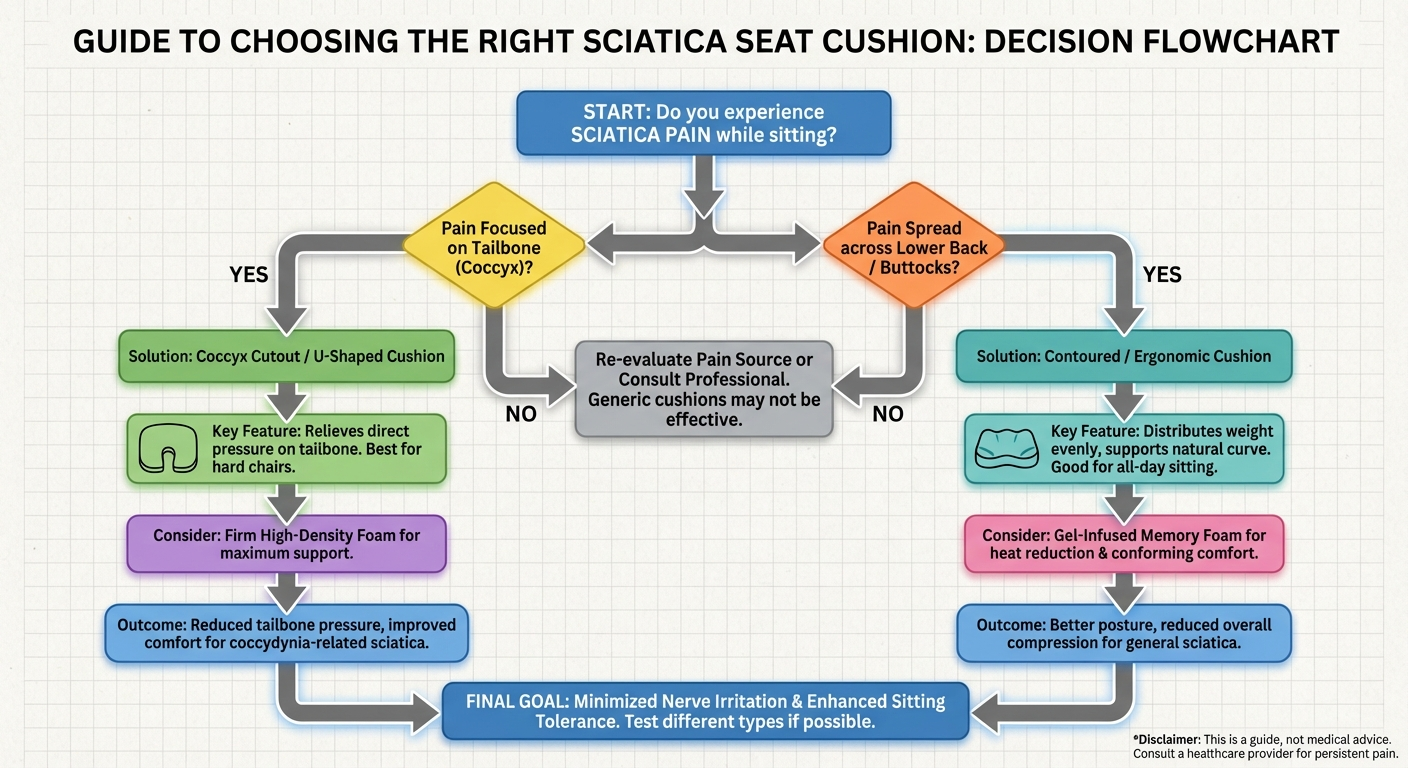 Use this guide to pick the right cushion for your specific sciatica type and sitting habits.
FAQ
Do seat cushions really help with sciatica?
Yes, seat cushions can significantly reduce sciatica symptoms while sitting. A well-designed cushion redistributes pressure away from the sciatic nerve, promotes proper spinal alignment, and reduces the compressive forces on lumbar discs. Clinical studies show that ergonomic seating interventions reduce sitting-related sciatica pain by 25–40%. However, cushions are a complement to — not a replacement for — exercise and proper treatment.
What type of cushion is best for sciatica — memory foam, gel, or inflatable?
Memory foam cushions with a coccyx cutout are the most effective for most sciatica sufferers. They conform to your body shape, distribute pressure evenly, and maintain support throughout the day. Gel cushions are better for temperature regulation and shorter sitting periods. Inflatable cushions offer adjustability but less consistent support. For severe sciatica, a wedge-shaped memory foam cushion with a coccyx cutout is the optimal choice.
Should I use a donut cushion for sciatica?
Donut (ring) cushions are not ideal for sciatica. While they relieve pressure on the tailbone, they concentrate weight on a narrow ring, which can increase pressure on the ischial tuberosities (sit bones) and piriformis muscle — potentially worsening sciatic symptoms. A U-shaped or coccyx cutout cushion is a better choice because it relieves tailbone pressure while maintaining broad, even weight distribution.
How thick should a sciatica cushion be?
For most people, a cushion thickness of 3–4 inches (7.5–10 cm) is optimal. Thinner cushions may not provide sufficient pressure redistribution, while thicker cushions can raise your seating position too high, disrupting desk ergonomics and potentially increasing hip flexion. If you are heavier than 220 lbs (100 kg), consider a 4-inch high-density foam cushion to prevent bottoming out.
Can I use a seat cushion in my car for sciatica?
Yes, and for many sciatica patients, the car seat is where symptoms are worst. Look for a cushion with a non-slip bottom that stays securely in place. Car-specific considerations include a thinner profile (2.5–3 inches) to maintain headroom, a non-slip base for bucket seats, and a shape that fits your car seat contour. Some cushions come with car-specific straps for added security.
How often should I replace my sciatica cushion?
Replace memory foam cushions every 18–24 months, or sooner if you notice the foam no longer rebounds to its original shape. Gel cushions typically last 2–3 years. A cushion that has lost its density no longer provides adequate pressure distribution and may worsen your symptoms. If you use your cushion daily for 8+ hours, expect to replace it on the shorter end of these ranges.
Is a wedge cushion better than a flat cushion for sciatica?
For most sciatica patients, a slight wedge (8–13 degree angle) is more effective than a flat cushion. The wedge tilts the pelvis forward, promoting the natural lumbar lordosis (inward curve) that reduces disc pressure. This is especially important for patients whose sciatica is caused by disc herniation. Flat cushions improve comfort but do not actively correct sitting posture the way a wedge does.
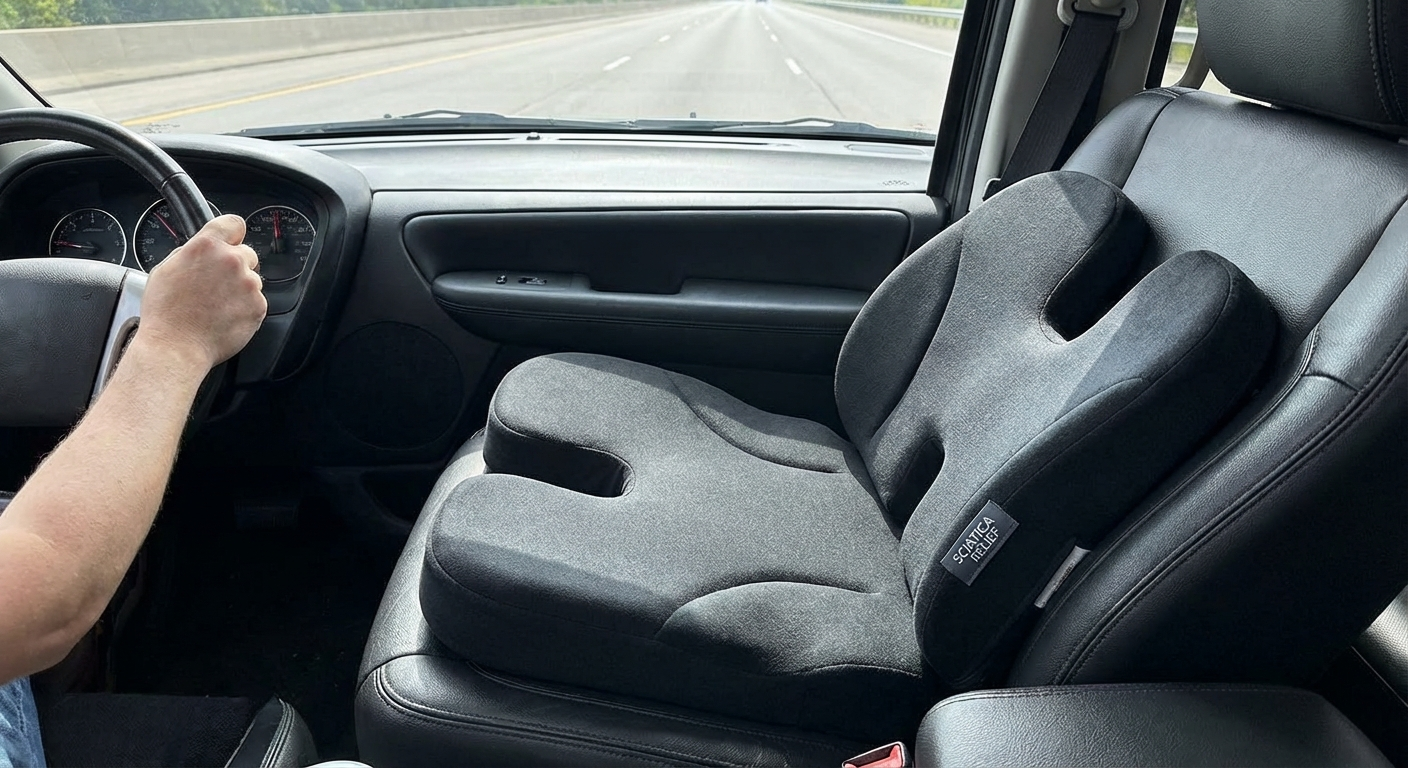 Long drives are one of the most common sciatica triggers — a good cushion makes a measurable difference.
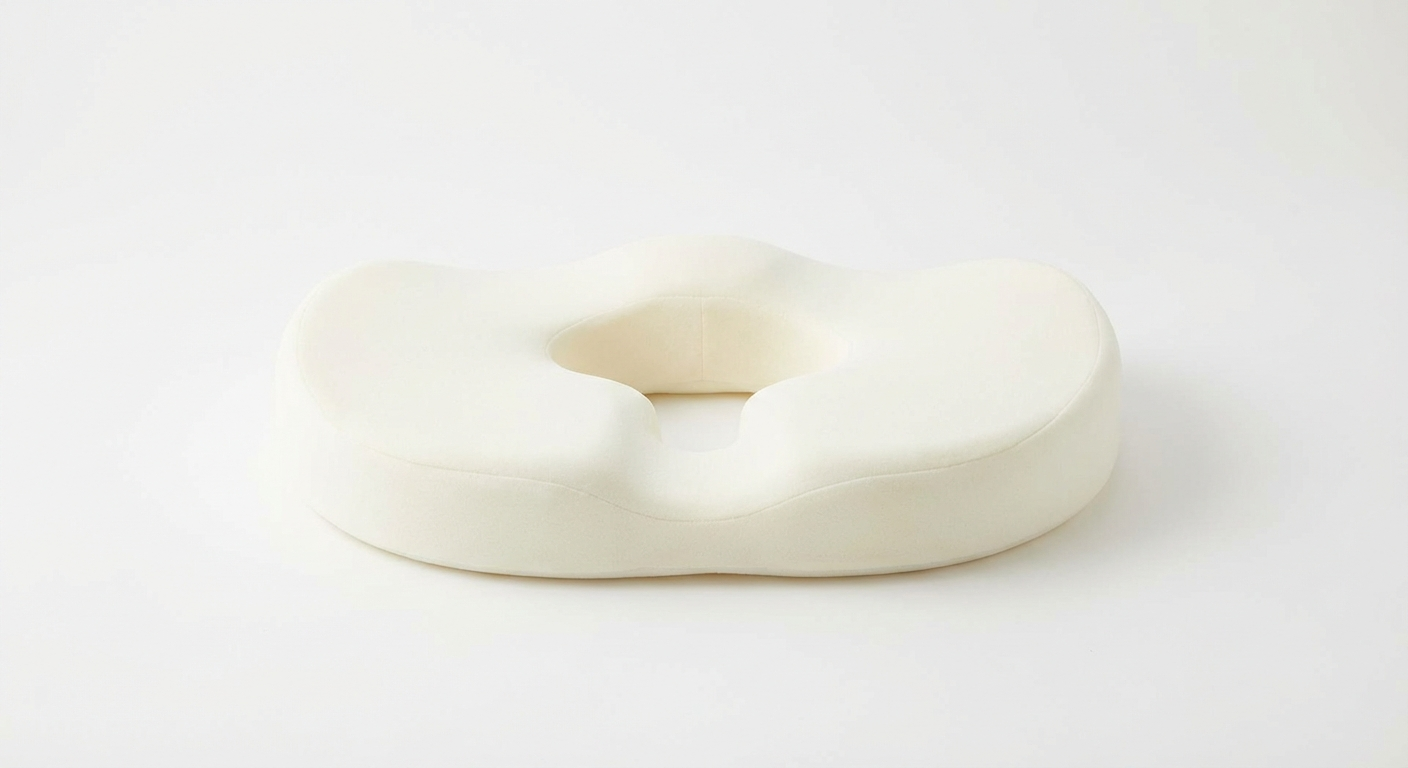 Donut cushions work best for tailbone-area pain — less effective for true L4-S1 nerve compression.
Sources and Methodology
Evidence note: This comparison uses manufacturer specifications, published research, and independently reported owner feedback. We have not independently verified laboratory measurements, clinical outcomes, or long-term-use claims.
Key References:
- Nachemson, A. (1966). "The load on lumbar disks in different positions of the body." Clinical Orthopaedics and Related Research, 45, 107–122.
- Wilke, H.J., et al. (1999). "New in vivo measurements of pressures in the intervertebral disc in daily life." Spine, 24(8), 755–762.
- De Carvalho, D.E., et al. (2019). "The effect of seated-posture interventions on low back pain." Applied Ergonomics, 74, 131–138.
- Aota, Y., et al. (2007). "An analysis of sitting posture and disc pressure." Journal of Orthopaedic Science, 12(2), 131–138.
- Makhsous, M., et al. (2009). "Biomechanical effects of sitting with adjustable ischial and lumbar support on occupational low back pain." BMC Musculoskeletal Disorders, 10, 17.
- Andersson, G.B., et al. (1979). "Intradiscal pressure, intra-abdominal pressure and myoelectric back muscle activity related to posture and loading." Clinical Orthopaedics and Related Research, 129, 156–164.
- Sprigle, S. & Press, L. (2003). "Reliability of the ISO wheelchair cushion test for loaded contour depth and overloaded area." Assistive Technology, 15(2), 145–150.
- O'Sullivan, P.B., et al. (2012). "Sitting posture and low back pain: Clinical implications." Manual Therapy, 17(4), 312–317.
Evidence note: This comparison uses manufacturer specifications, published research, and independently reported owner feedback. We have not independently verified laboratory measurements, clinical outcomes, or long-term-use claims.
Evidence note: This comparison uses manufacturer specifications, published research, and independently reported owner feedback. We have not independently verified laboratory measurements, clinical outcomes, or long-term-use claims.