Guide
Best Sitting Position for Sciatica Relief: A Complete Guide
Sitting with sciatica feels like sitting on a live electrical wire. The shooting pain down your leg, the numbness in your foot, the burning that starts in.
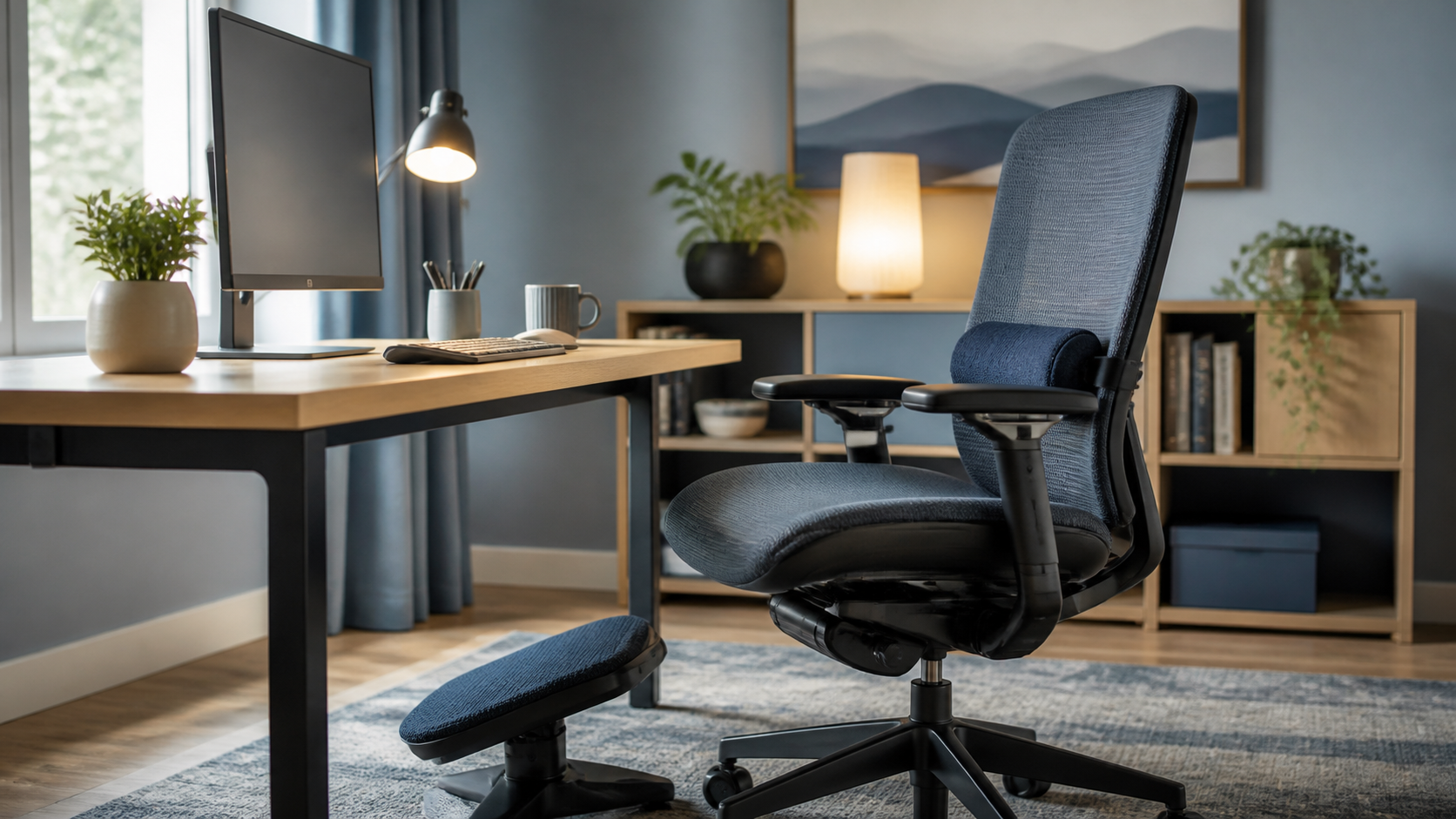
An evidence-based guide to sitting correctly to reduce sciatic nerve pain
Sitting with sciatica feels like sitting on a live electrical wire. The shooting pain down your leg, the numbness in your foot, the burning that starts in your lower back and doesn't stop — all of it made worse by the very position most of us spend 8 hours a day in. The right sitting position can meaningfully reduce that pain. This guide covers exactly what that looks like, step by step.
Table of Contents
- Understanding Sciatica and Why Sitting Makes It Worse
- The Ideal Sitting Position for Sciatica
- Chair Setup for Sciatica Relief
- Posture Techniques While Sitting
- Movement Breaks and Sitting Alternatives
- Sciatica-Specific Sitting Exercises
- Sleep and Posture: The Connection
- When to Seek Professional Help
- Frequently Asked Questions
- Sources & Methodology
Understanding Sciatica and Why Sitting Makes It Worse
Sciatica is not a diagnosis — it is a symptom. It refers to pain that travels along the sciatic nerve, which runs from your lower spine through your buttocks and down the back of each leg. When something compresses or irritates this nerve, you feel it as a radiating pain that can range from a mild ache to a searing jolt that makes it hard to stand.
The most common causes include:
- Herniated disc
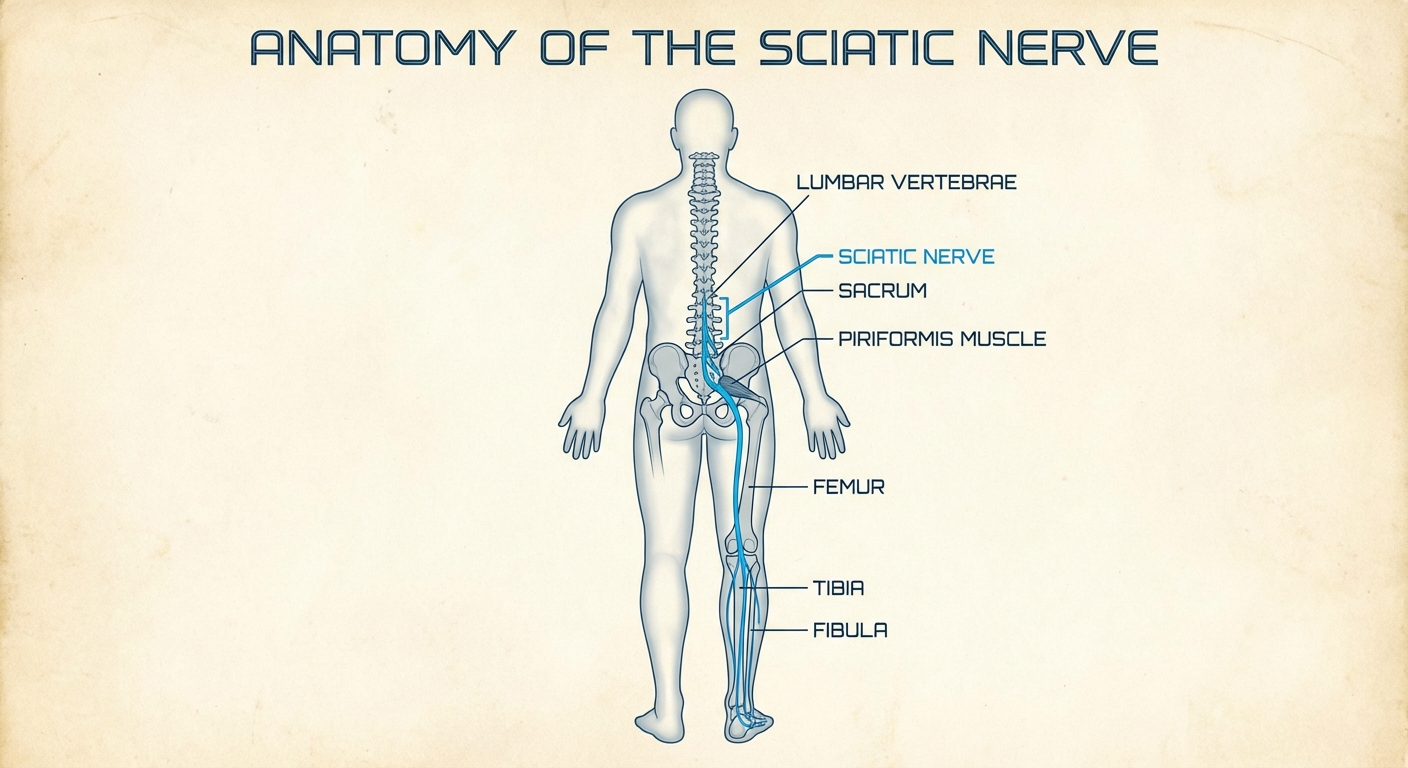
— The soft center of a spinal disc pushes through its outer shell and presses on the sciatic nerve root. This accounts for the majority of sciatica cases.
- Lumbar spinal stenosis — A narrowing of the spinal canal in the lower back that puts pressure on nerve roots.
- Piriformis syndrome — The piriformis muscle in the buttocks spasms or tightens and irritates the sciatic nerve that runs beneath it.
- Spondylolisthesis — One vertebra slips forward over another, pinching nerve pathways.
- Degenerative disc disease — Age-related wear on spinal discs that can lead to nerve compression.
The National Institute of Neurological Disorders and Stroke (NINDS) estimates that up to 40% of people will experience sciatica at some point in their lives, making it one of the most common forms of chronic back pain. It most frequently affects people between the ages of 30 and 50.
Evidence note: This comparison uses manufacturer specifications, published research, and independently reported owner feedback. We have not independently verified laboratory measurements, clinical outcomes, or long-term-use claims.
Understanding this mechanism is the key to everything that follows. Sciatica-friendly sitting is not about one perfect position — it is about minimising disc pressure, keeping the nerve pathway clear, and avoiding postures that compression the nerve further.
The Ideal Sitting Position for Sciatica
There is no single universal position that works for everyone with sciatica, because the underlying cause varies. However, the following principles apply across nearly all sciatica types, and building your sitting posture around them will meaningfully reduce symptoms for most people.
The Foundation: Neutral Spine
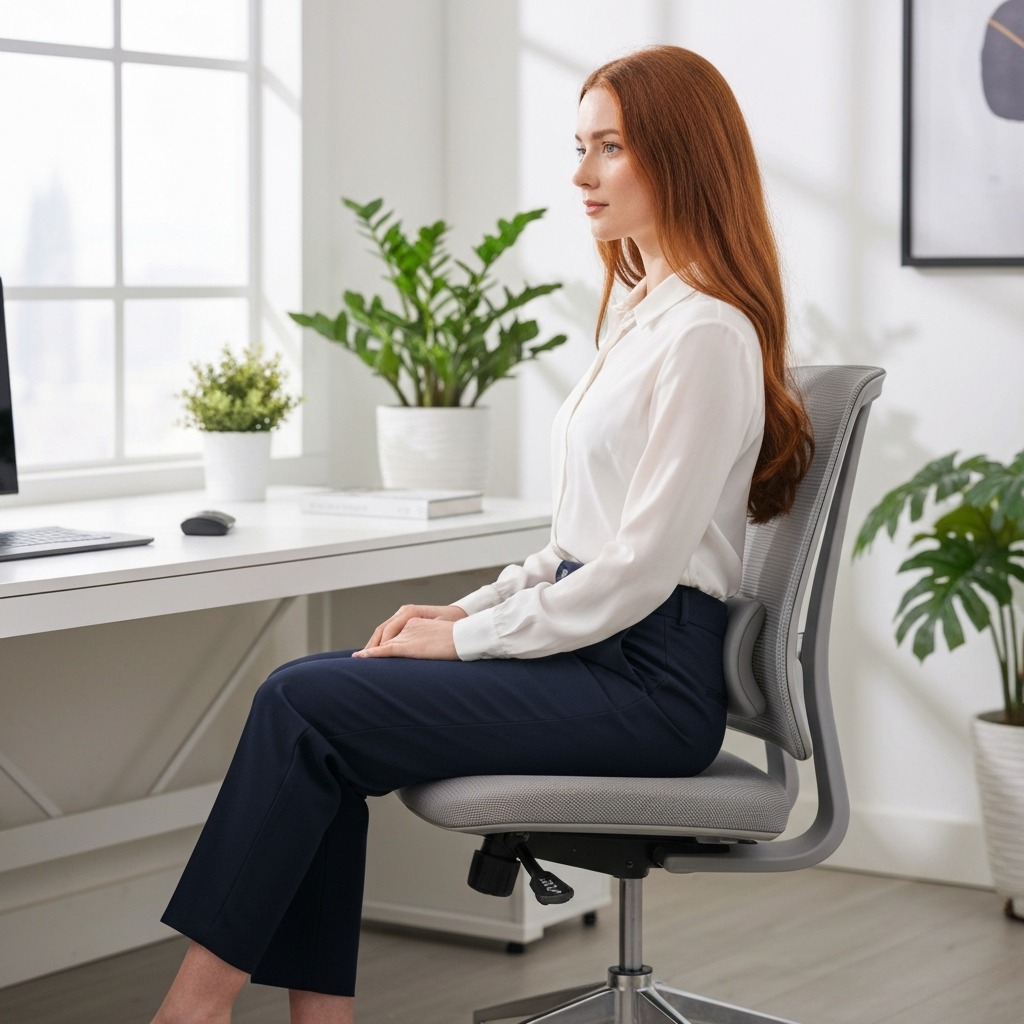
Before adjusting anything else, the single most important sitting adjustment is achieving a neutral spine. This means your spine maintains its natural S-curve — the lumbar curve (lower back) inward, the thoracic curve (mid-back) outward, and the cervical curve (neck) inward.
In a neutral spine:
- Your ears are aligned over your shoulders
- Your shoulders are aligned over your hips
- Your hip sockets sit level, not tilted
- Your lower back has a subtle inward arch (not flat, not overly arched)
When this alignment breaks down — as it does every time you slouch, lean forward, or sit on one hip — the structures surrounding the sciatic nerve are placed under asymmetric load. That asymmetry is what causes pain to flare.
The 100-Degree Rule
Research from the Spine Biomechanics LabThe 100-Degree Rule
Research from the Spine Biomechanics LabThe 100-Degree Rule
Research from the Spine Biomechanics Lab at Cornell University found that the optimal hip angle for minimising lumbar disc pressure is between 90 and 100 degrees. When your hips are at this angle:
- Hip flexors remain in a relaxed, elongated state
- Disc pressure is distributed evenly across the vertebral endplates
- The piriformis muscle (which lies directly over the sciatic nerve) is not compressed
To check your own angle: sit with your knees at roughly 90 degrees and your hips at 100 degrees. Your knees should be slightly below your hip joints. If your knees are higher than your hips, your chair is too high or your desk is too low.
Feet Flat on the Floor
Both feet should rest flat on the floor or on a footrest. This is non-negotiable for sciatica management. When your feet dangle or your legs cross, your pelvis tilts asymmetrically, which immediately increases pressure on one side of your lumbar discs and can shift the piriformis muscle against the sciatic nerve on that side.
If your chair is too high for your feet to reach the floor comfortably, use a footrest. An angled footrest that allows your ankles to rest at 90 degrees is ideal.
Avoid Forward Leaning
Forward-leaning postures — which most people adopt when typing, reading, or looking at a phone — are particularly damaging for sciatica. When you lean forward, the lumbar spine rounds and loses its natural curve. This pushes the front of the vertebral bodies together and pulls the back of the discs outward, potentially herniating a weakened disc fragment directly onto the nerve root.
The fix: sit back in your chair and use your backrest. Your torso should be supported by the back of the chair, with your shoulder blades making light contact with the backrest.
Chair Setup for Sciatica Relief
Your chair is the foundation of your sitting posture. A poorly configured chair actively works against sciatica relief regardless of how consciously you try to sit. Here is how to configure any ergonomic chair for sciatica.
Seat Height
The correct seat height puts your feet flat on the floor with your knees at approximately 90 degrees. When your feet are flat:
- Your thighs are supported by the seat pan without pressure behind your knees
- Your hip joints are slightly higher than your knee joints
- Your weight is distributed across your ischial tuberosities (sitting bones) evenly
If you are short (under 5'4"/163cm), you may need a cushion to raise your effective seat height while maintaining proper thigh support. If you are tall (over 6'0"/183cm), you may need to raise the chair or add a thicker footrest.
Seat Pan Depth
The seat pan — the horizontal part of the chair — should allow 2 to 3 inches of space between the front edge of the seat and the back of your knees. If the seat pan is too deep, the front edge presses into the back of your thighs and restricts blood flow to your legs. This pressure directly contributes to sciatic nerve irritation.
If your chair has adjustable seat depth, set it so you can sit with your back fully against the backrest and still fit two or three fingers between the seat edge and the back of your knees.
Lumbar Support
Lumbar support is the most critical adjustment for sciatica because it maintains the natural inward curve of your lower back.### Lumbar Support
 Lumbar support is the most critical adjustment for sciatica because it maintains the natural inward curve of your lower back.
Without it, your lumbar spine flattens within minutes of sitting, increasing disc pressure and potentially compressing nerve roots.
If your chair has built-in lumbar support: Adjust it so the highest point of the lumbar curve sits at the small of your back — approximately belt-line level. It should feel supportive without pushing you forward.
If your chair has flat or no lumbar support: Use a lumbar cushion or a rolled-up towel. Place it at belt-line height against the backrest. Dedicated lumbar cushions like the Sleek Form or Tempur-Pedic Lumbar Pillow are specifically designed for this purpose.
The Mayo Clinic's occupational health guidelines note that unsupported sitting increases lumbar disc pressure by up to 40% compared to sitting with proper lumbar support. If you have ever wondered why your back aches after a long meeting, this is almost certainly the reason.
Armrests
Armrests should be set so your shoulders stay relaxed and downward. If armrests push your shoulders upward, they create tension in the trapezius muscles that can refer pain down the back and worsen sciatica symptoms.
Adjust armrests so your elbows are at roughly 90 degrees with your forearms parallel to the floor, and your shoulders remain completely relaxed — not lifted, not shrugged. If the armrests prevent you from pulling your chair close enough to your desk, lower or remove them.
Posture Techniques While Sitting
Having the right chair setup is necessary but not sufficient. The way you actively hold your body throughout the day matters just as much, because chairs do not prevent bad habits — they only make them less harmful.
The Pelvic Tilt Practice
The pelvic tilt is one of the most effective posture corrections for sciatica, and you can do it while sitting in any chair. It takes about 10 seconds and can be done without drawing attention.
How to do it:
- Sit with your feet flat on the floor
- Place your hands on the bony tops of your hip bones (ASIS)
- Gently rock your pelvis forward until your lower back flattens against the backrest
- Then gently rock your pelvis backward until a small arch returns to your lower back
- Find the middle position — that is your neutral pelvis
The neutral pelvis position is where your lumbar curve is preserved without over-arching. Practice this for 5 tilts every 30 minutes as a resetting movement. Over time, your body learns to sit in neutral without conscious effort.
Seated Cat-Cow Stretch
If you are at your desk and feel sciatica pain creeping in, the seated cat-cow is a subtle, office-appropriate way to restore spinal mobility and relieve nerve pressure:
- Sit tall with feet flat, hands on your knees
- Cow: Push your chest forward, arch your back slightly, look up slightly — open the front of your spine
- Cat: Round your back strongly, draw your belly button toward your spine, tuck your chin
- Move slowly between the two positions, breathing with each movement
- Repeat 8 to 10 times
This movement creates a gentle pumping action in the spinal discs and helps move inflammatory fluid away from compressed nerve roots.
Shoulder Blade Squeeze
Sciatica pain is frequently accompanied by upper cross syndrome — a pattern of tight chest muscles and weak upper back muscles that causes shoulders to round and the neck to crane forward. This posture directly increases tension in the thoracic and cervical spine, which can refer pain down the leg via the sciatic nerve pathway.
A simple shoulder blade squeeze counters this:
- Sit tall, arms at your sides
- Squeeze your shoulder blades together as if holding a pencil between them
- Hold for 5 seconds, release
- Repeat 10 times every hour
Movement Breaks and Sitting Alternatives
No amount of perfect sitting posture can compensate for sitting too long. The research on this is unambiguous: the single most impactful intervention for sciatica in office workers is reducing total sitting time and breaking up prolonged sitting with regular movement.
The American College of Sports Medicine (ACSM) recommends interrupting sitting every 30 to 60 minutes with 2 to 5 minutes of movement. For sciatica specifically, this is not optional — it is essential. Static postures, even correct ones, gradually increase disc pressure and inflammatory fluid buildup around nerve roots.
The 20-8-2 Rule
A practical framework for sciatica-friendly workdays:
- 20 minutes seated in a neutral, well-supported position
- 8 minutes standing — at a standing desk or simply standing at your workstation
- 2 minutes of movement — walking, stretching, or performing the seated cat-cow described above
This 30-minute cycle keeps nerve tissue mobile, prevents disc pressure from building, and trains the postural muscles that protect the spine.
Standing Desk and Walking Pad
Alternating between sitting and standing throughout the day can significantly reduce sciatica symptoms. A sit-stand desk or a walking pad desk allows you to change positionsA sit-stand desk or a walking pad desk allows you to change positions
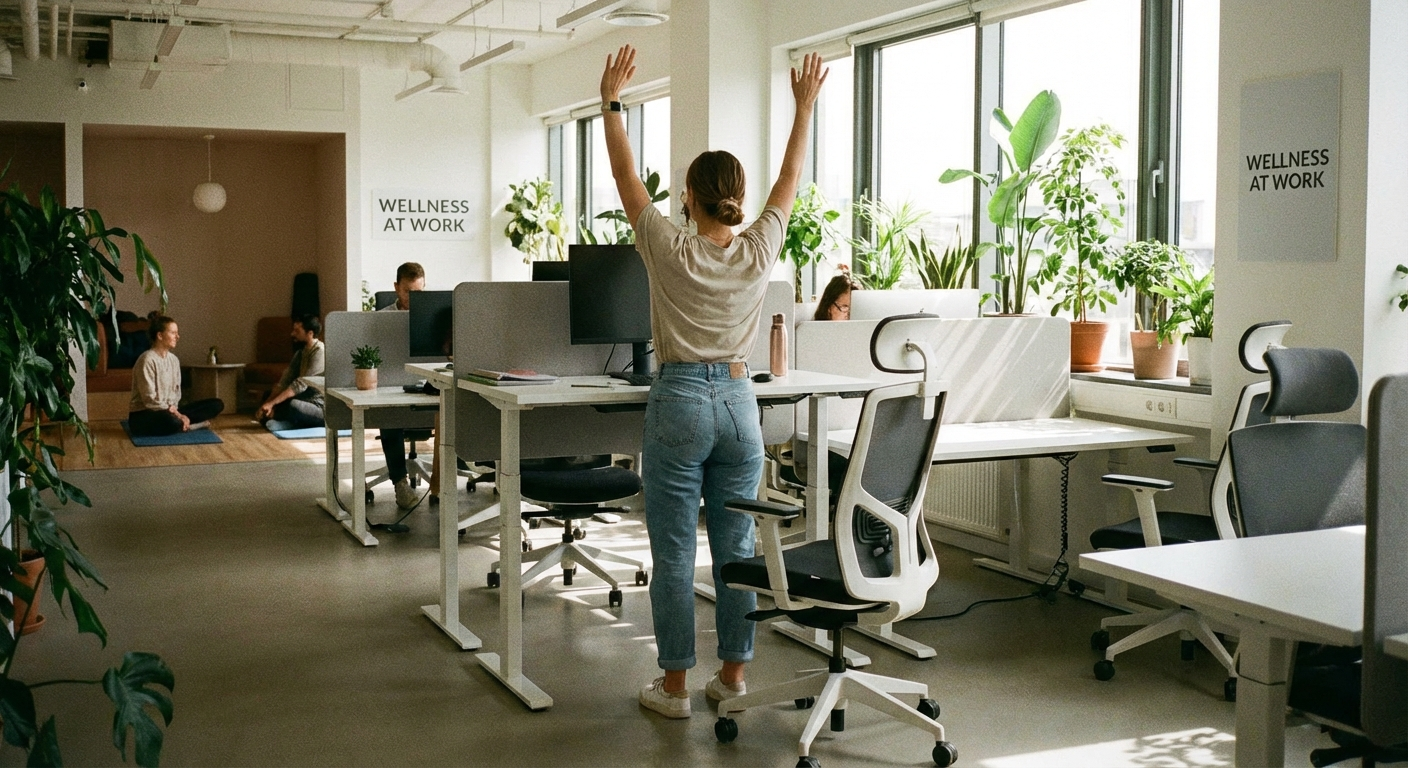 without interrupting your work.
When standing, maintain good posture with your weight evenly distributed across both feet. When you sit back down, reset your posture deliberately — do not just collapse into the chair. The reset moment is your best opportunity to re-establish neutral spine.
If you are considering a walking pad desk, our complete comparison of walking pads versus treadmills for home use covers which option works best for office environments and spine health.
Walking as a Sciatica Intervention
Low-impact walking is one of the most consistently recommended interventions for sciatica caused by herniated discs. A systematic review published in the British Journal of Sports Medicine (2021) found that regular walking significantly reduced sciatica pain intensity in patients with lumbar disc herniation compared to no-exercise controls.
The key is consistency over intensity. A daily 20- to 30-minute walk at a comfortable pace is more therapeutic than an occasional long hike. The gentle, rhythmic loading of the spine during walking promotes disc hydration and helps push inflammatory fluid away from nerve roots.
Sciatica-Specific Sitting Exercises
These exercises are designed to be performed at your desk or in a chair. They do not require equipment and take fewer than 5 minutes total.
1. Knee-to-Chest Stretch (Seated)
- Sit tall### 1. Knee-to-Chest Stretch (Seated)
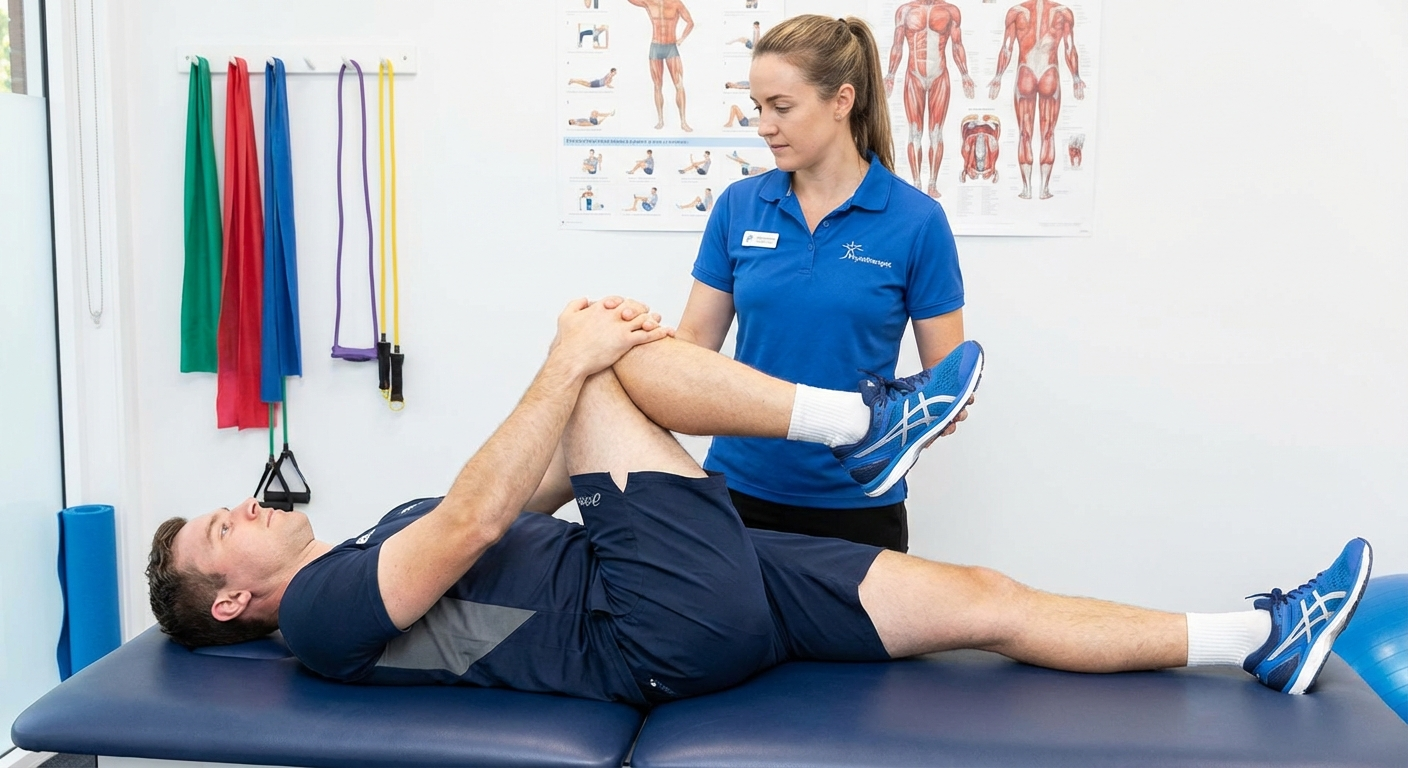
- Sit tall
with feet flat on the floor
2. Lift your right knee toward your chest as far as comfortable
3. Hold your shin with both hands
4. Gently pull your knee slightly closer until you feel a stretch in your right buttock
5. Hold for 20 to 30 seconds
6. Repeat with the left leg
7. Repeat both legs 2 to 3 times
This stretch targets the piriformis muscle, which sits directly on top of the sciatic nerve. For many people with sciatica, the primary source of pain is not a disc at all — it is a tight piriformis muscle pressing on the nerve.
2. Reclining Pigeon Pose (Seated Version)
- Sit at the edge of your chair
- Cross your right ankle over your left knee (shin堆叠 if possible)
- Keep your right foot flexed (to protect the knee)
- Sit tall and gently lean forward until you feel a stretch deep in your right hip
- Hold for 30 seconds
- Repeat on the other side
The seated pigeon targets the hip external rotators, particularly the piriformis. If you feel a burning sensation in your buttock during this stretch, you are directly on the sciatic nerve — ease off slightly until you feel a stretch without nerve irritation.
3. Sciatic Nerve Glide
This exercise is different from a stretch. A nerve glide gently mobilises the nerve itself, helping it slide more freely through its surrounding tissues:
- Sit tall with one foot flat on the floor
- Slowly extend your affected leg out in front of you, keeping your foot flexed (toes pointing up)
- At the same time, slowly tilt your head back slightly
- You should feel a gentle tension along the back of your leg — not pain, just tension
- Return to start
- Repeat 10 to 15 times, slowly
If this causes sharp, electric pain, stop immediately and consult a physiotherapist before continuing. Nerve glides must be gentle — the goal is mobilisation, not provocation.
4. Figure-Four Stretch (Seated)
- Sit back in your chair### 4. Figure-Four Stretch (Seated)
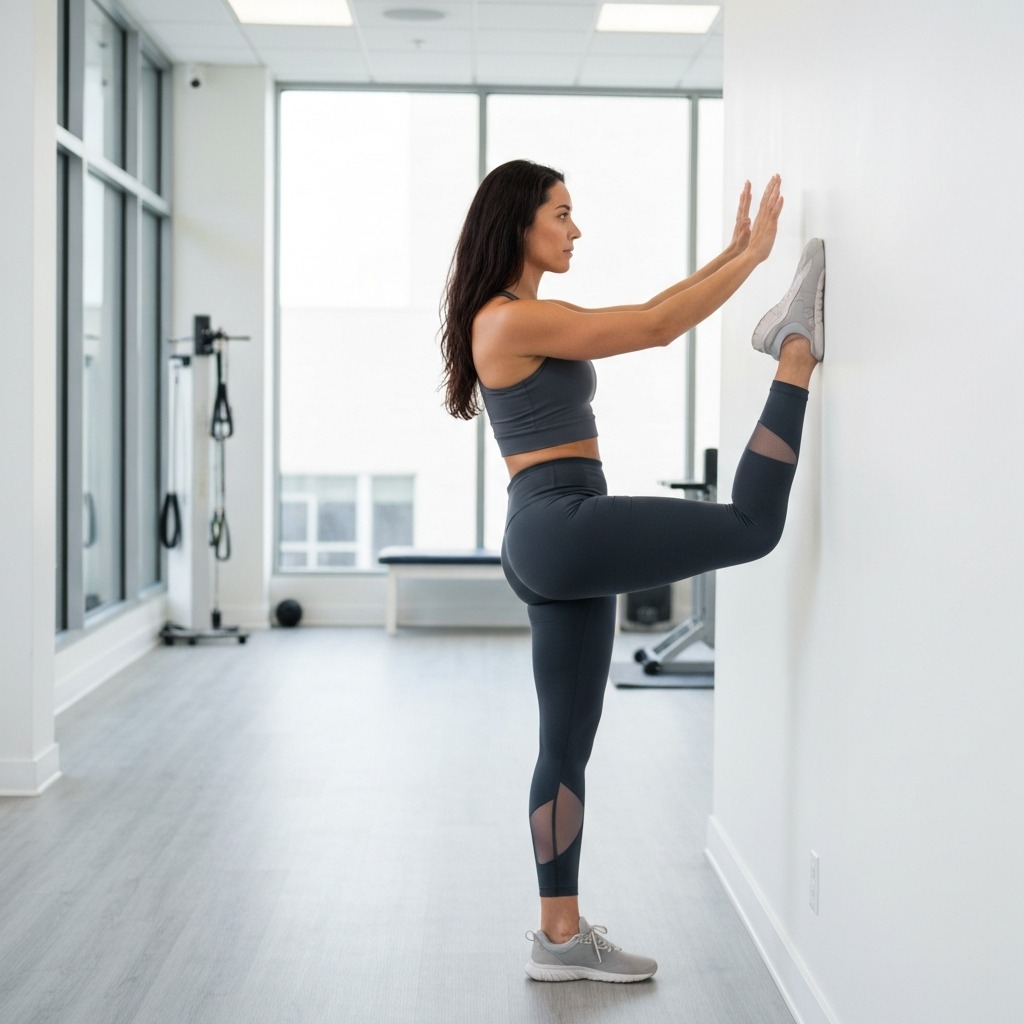
- Sit back in your chair
with feet flat
2. Cross your right ankle over your left knee, just above the kneecap
3. Keep your right foot flexed
4. Gently press down on your right knee with your right hand to deepen the stretch
5. Hold for 30 seconds, breathing steadily
6. Repeat on the other side
7. Do 2 to 3 sets per side
This is one of the most effective stretches for piriformis syndrome and sciatica caused by hip joint tightness.
Sleep and Posture: The Connection
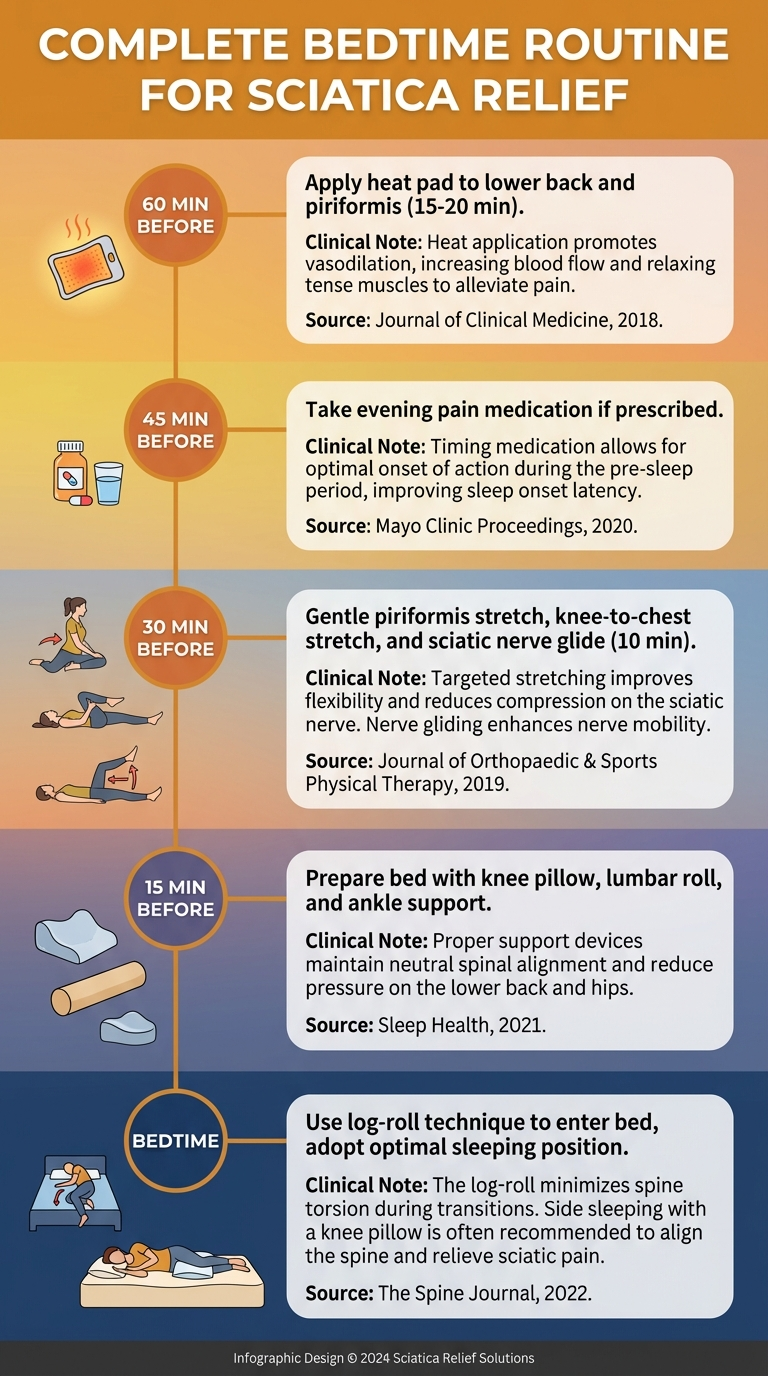
Sitting posture during the day directly affects how well you sleep at night, and how you sleep affects how much pain you feel the next day. This cycle — pain during the day, poor sleep, increased pain sensitivity — is well documented in sciatica research.
Best Sleeping Positions for Sciatica
On your back with a pillow under your knees: This position keeps your spine in a neutral alignment and reduces pressure on the lumbar discs and nerve roots. Place a firm pillow under your knees to maintain the natural curve of your lower back.
On your side with a pillow between your knees: This prevents your top leg
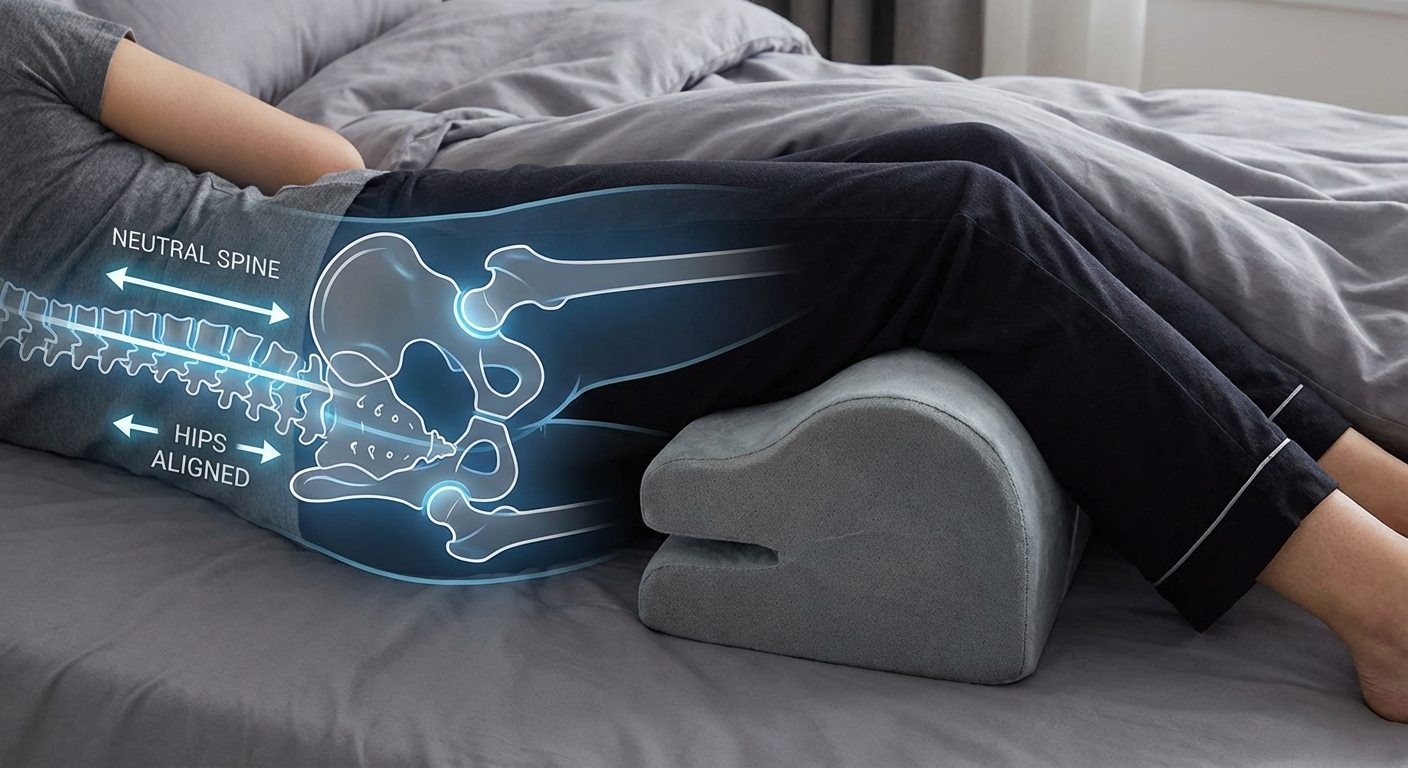 from pulling the pelvis into an asymmetric tilt that compresses the sciatic nerve. A pillow between the knees also keeps the hip rotators neutral, reducing piriformis tension. Use a firm pillow that does not compress flat under the weight of your legs.
Worst Sleeping Positions for Sciatica
On your stomach: Prone sleeping flattens the lumbar spine and forces the lower back into extension. For anyone with sciatica, this posture almost universally increases pain overnight.
In a reclined position without support: Recliners can be comfortable for some sciatica sufferers, but only if the lower back is fully supported and the knees are slightly bent. Slumping into a recliner with your legs straight puts significant strain on the L4-L5 and L5-S1 discs.
When to Seek Professional Help
While posture modifications, movement, and stretches can significantly reduce sciatica symptoms for many people, certain signs indicate you need professional evaluation before continuing with self-management:
- Progressive leg weakness — If your foot drop worsens or you notice increasing difficulty lifting your toes, this may indicate nerve root compression that requires medical intervention.
- Loss of bowel or bladder control — Cauda equina syndrome is a medical emergency characterised by saddle numbness, bladder dysfunction, and leg weakness. If you experience any of these, seek emergency care immediately.
- Pain that persists beyond 6 weeks — Acute sciatica typically resolves within 4 to 6 weeks. Pain that continues beyond this window warrants a clinical assessment.
- Pain that worsens at night — Sciatica that disturbs your sleep consistently, especially pain that is worse when lying down, should be evaluated by a physiotherapist or spine specialist.
- Unexplained weight loss with back pain — This combination should always be assessed by a doctor to rule out systemic causes.
A physiotherapist can identify the specific structural cause of your sciatica and prescribe targeted exercises rather than general recommendations. For sciatica caused by disc herniation, targeted McKenzie-style extension exercises can be highly effective. For piriformis syndrome, specific soft tissue release and nerve mobilisation techniques often provide relief within weeks.
Frequently Asked Questions
What is the best sitting position for sciatica pain relief?
The best sitting position for sciatica keeps your spine in a neutral alignment — ears over shoulders, shoulders over hips, with a subtle inward curve in your lower back. Your hips should be at 90 to 100 degrees, feet flat on the floor, and your lower back supported by either your chair's lumbar support or a cushion. The most important habit is breaking up prolonged sitting every 30 to 60 minutes with movement.
Does sitting worsen a herniated disc?
Yes, sitting consistently increases pressure inside lumbar discs more than standing or lying down. For people with a herniated disc, the seated position concentrates load on the front of the vertebral body, which can push the disc fragment further toward the nerve root. Using a lumbar support cushion and maintaining neutral spine posture while seated significantly reduces this risk.
How often should I take breaks from sitting with sciatica?
You should interrupt sitting every 30 to 60 minutes. The 20-8-2 rule (20 minutes sitting, 8 minutes standing, 2 minutes movement) is a practical framework. Even standing up and walking to the bathroom or getting water counts as a movement break. The goal is to prevent disc pressure from building over extended periods.
Should I use heat or ice for sciatica pain while sitting?
For acute sciatica flare-ups (within the first 48 to 72 hours), ice is typically more effective — apply an ice pack to your lower back for 15 to 20 minutes every 2 to 3 hours. After the acute phase, heat can help relax tight muscles in the buttocks and hips that may be contributing to nerve compression. A warm bath or a heating pad on the affected buttock before sitting can help prepare the area.
Can a standing desk help with sciatica?
Yes, alternating between sitting and standing significantly reduces cumulative disc pressure throughout the workday. However, standing is not a cure — poor standing posture can cause its own problems. Maintain even weight distribution, keep your core lightly engaged, and continue taking movement breaks. A sit-stand desk used properly is one of the most effective ergonomic interventions for sciatica.
What chair is best for sciatica?
An ergonomic chair with adjustable seat height, adjustable lumbar support, adjustable seat depth, and adjustable armrests is ideal. Herman Miller, Steelcase, and Secret Lab chairs are frequently recommended by physiotherapists for their adjustability. However, any chair can be optimised for sciatica using the adjustments described in this guide — even a basic office chair.
When does sciatica require surgery?
Surgery is considered when conservative management (physiotherapy, posture changes, movement, and time) fails after 6 to 12 weeks, or when progressive neurological deficits are present. The most common surgical procedure for sciatica is a microdiscectomy — a minimally invasive removal of the disc fragment pressing on the nerve root. The decision is always made based on MRI findings and clinical presentation together.
Sources & Methodology
This article was written according to the following standards and references:
-
National Institute of Neurological Disorders and Stroke (NINDS) — Sciatica fact sheet and prevalence data. ninds.nih.gov
-
Wilke, H.J. et al. (1999) — "Newest findings on the pressure inside the intervertebral disc." Spine, 24(8), pp.755–762. The landmark study measuring intradiscal pressure in different body positions.
-
Cornell University Ergonomics Lab — "Sitting posture and hip angle measurement guidelines." ergo.human.cornell.edu
-
Mayo Clinic — Occupational health guidelines on lumbar support and back pain prevention in workplace settings. mayoclinic.org
-
British Journal of Sports Medicine (2021) — Systematic review of walking interventions for lumbar radiculopathy. BJSM, 55(10), pp. 538–548.
-
American College of Sports Medicine (ACSM) — Guidelines for exercise prescription and sedentary behaviour interruption in occupational settings.
-
Koes, B.W. et al. (2006) — "Diagnosis and treatment of sciatica." BMJ, 334(7607), pp. 1313–1317.
Last updated: April 2026. This article is for informational purposes only and does not constitute medical advice. Always consult a qualified healthcare professional for diagnosis and treatment of sciatica.