Sciatica Treatment
Cold vs Heat Therapy for Sciatica: Which Works Better? (2026)
Discover whether cold or heat therapy works better for sciatica pain relief. Expert guide with science-backed protocols, application tips, and what research.
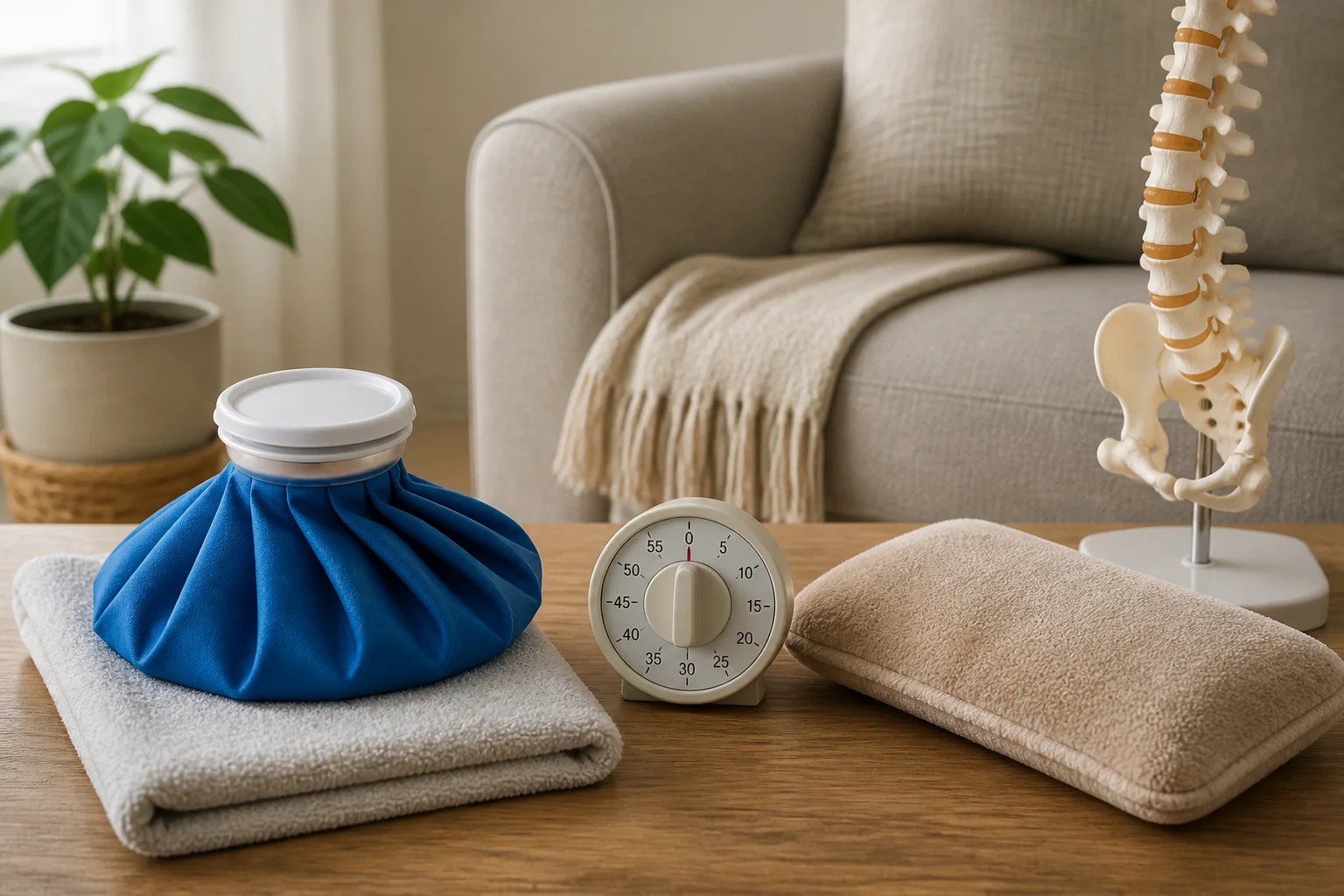
Applying the right temperature to the right nerve root at the right time can be the difference between weeks of agony and days of relief. Sciatica responds powerfully to both cold and heat — but choosing incorrectly can set your recovery back by days. This guide breaks down the science so you can make the right call.
Table of Contents
- The Science Behind Temperature and Nerve Pain
- When Cold Therapy Is the Right Choice
- When Heat Therapy Is the Right Choice
- The Alternating Protocol: Getting the Best of Both
- Cold vs Heat: Direct Comparison
- How to Apply Cold Therapy Safely
- How to Apply Heat Therapy Safely
- Common Mistakes to Avoid
- Frequently Asked Questions
- Sources & Methodology
The Science Behind Temperature and Nerve Pain
Sciatica is not a diagnosis in itself — it is a symptom. It describes pain that radiates along the sciatic nerve, which runs from your lower back through your hips and buttocks and down each leg. When this nerve becomes compressed, irritated, or inflamed, the resulting pain can range from a mild ache to a searing shock that makes it hard to sit, stand, or sleep.
Cold therapy — also called cryotherapy — works by causing blood vessels to constrict, which reduces blood flow to the affected area. Less blood flow means less inflammatory fluid pooling around the nerve root. Cold also slows nerve conduction velocity, meaning pain signals travel more slowly along the nerve. A 2012 review published in the British Journal of Sports Medicine found that cryotherapy significantly reduced subjective pain scores in musculoskeletal injuries, particularly in the acute phase. Ice also reduces muscle spasm by lowering the metabolic demand of muscle tissue.
Heat therapy — also called thermotherapy — works through blood vessel dilation. When heat is applied, blood vessels widen, increasing circulation to the area. This brings fresh oxygen and nutrients while sweeping away inflammatory byproducts. Heat also reduces the viscosity of collagen tissues, making muscles and connective tissue more pliable and less likely to spasm. A 2013 systematic review in the Cochrane Database of Systematic Reviews noted that heat wrap therapy produced statistically significant short-term pain reduction in acute low back pain — the same region where sciatica originates.
The key insight is this: sciatica has two distinct phases, and each responds best to a different temperature.
When Cold Therapy Is the Right Choice
Cold therapy is your first-line treatment during the acute inflammatory phase of sciatica. This phase typically lasts 48-72 hours after a pain flare-up begins and is characterised by:
- Sharp, stabbing pain that started suddenly
- Visible or palpable swelling in the lower back or buttock
- Pain that worsens with pressure on the affected area
- Redness or warmth over the inflamed nerve root
- Pain that is worse at rest and better with movement (once you get moving)
In the acute phase, your body is sending inflammatory cells to the nerve root. Ice suppresses this response by constricting capillaries and reducing the volume of inflammatory fluid collecting around the nerve. It also provides a numbing effect on the sensory nerve fibres themselves, which can offer meaningful relief when pain is severe.
The cold-therapy advantage is clearest when sciatica is caused by:
- A herniated or bulging disc pressing on a nerve root
- Acute disc protrusion with surrounding inflammation
- A recent muscle strain in the piriformis that irritates the sciatic nerve (piriformis syndrome)
- Post-procedural inflammation after an epidural steroid injection or other interventional procedure
Cold also has a practical advantage: it is safe to apply even when you are taking blood-thinning medications, whereas some heat modalities can increase bleeding risk. If you have circulatory conditions such as Raynaud's phenomenon or peripheral vascular disease, cold therapy should still be used cautiously — discuss with your doctor first.
For more on the underlying causes of sciatica, see our guide to sciatica stretches for immediate relief. For nerve-related conditions in our network, also see tinnitus and nerve pain on TinnitusGuides.com.
When Heat Therapy Is the Right Choice
Heat therapy shines in the subacute and chronic phases of sciatica, when the initial inflammatory response has subsided and the primary problem is muscular tension, stiffness, and reduced mobility. Look for these indicators that heat is appropriate:
- Pain that has persisted for more than 72 hours without sharp escalation
- Stiffness that is worse in the morning or after prolonged sitting
- Muscle tightness in the lower back, glutes, or hamstrings
- Pain that is relieved (at least temporarily) by movement or gentle stretching
- Aching, throbbing pain rather than sharp, electric shocks
Heat works by relaxing the erector spinae muscles, gluteal muscles, and hamstrings — all of which can go into protective spasm when the sciatic nerve is irritated. When these muscles are tight, they compress the sciatic nerve further, creating a vicious cycle. Heat breaks this cycle by relaxing the soft tissue and increasing its elasticity.
Heat is especially beneficial when sciatica is caused by:
- Spinal stenosis, where bone spurs narrow the canal through which the nerve travels
- Degenerative disc disease with associated muscle fatigue
- Chronic piriformis syndrome without acute inflammation
- Sacroiliac joint dysfunction that refers pain along the sciatic nerve
- General lower back stiffness from prolonged sitting or poor posture
Heat also has a neurological benefit: warm receptors in the skin can inhibit pain transmission through the gate control theory mechanism. When warmth-sensitive nerve fibres are activated, they can partially block pain signals from the smaller pain fibres carrying the sciatica signal. This is why a warm shower can sometimes provide the first real relief someone with chronic sciatica has felt in days.
To understand which exercises pair well with heat therapy, see our article on the best exercises for sciatica.
The Alternating Protocol: Getting the Best of Both
If you have access to both cold and heat modalities, the most effective approach for many people is contrast therapy — alternating between the two temperatures. This creates a pumping action in the blood vessels of the affected area:
- Cold first for 15-20 minutes to reduce inflammation and numb sharp pain
- Heat for 15-20 minutes to increase blood flow and relax muscles
- Repeat the cycle 2-3 times
This protocol works well for sciatica that has both inflammatory and muscular components — which describes a large proportion of cases. The cold phase flushes inflammatory fluid out, and the heat phase draws fresh, oxygenated blood back in. Over two or three cycles, this can significantly reduce swelling while preventing the muscle stiffness that often accompanies nerve pain.
A note of caution: do not apply cold immediately after heat (or vice versa) without a rest period. The temperature extremes are jarring to nerve tissue and can cause increased pain rather than relief. Allow at least 30 minutes between switching modalities if you are not following a structured contrast protocol.
Cold vs Heat: Direct Comparison
| Factor | Cold Therapy | Heat Therapy |
|---|---|---|
| Best for phase | Acute inflammation (0-72 hours) | Subacute/chronic (72+ hours) |
| Mechanism | Vasoconstriction, reduced inflammation | Vasodilation, increased circulation |
| Pain relief type | Numbs nerve signal transmission | Relaxes muscles, gates pain signal |
| Muscle effect | Reduces spasm temporarily | Releases chronic tightness |
| Application time | 15-20 minutes per session | 15-30 minutes per session |
| Frequency | 3-4 times daily (acute phase) | 2-3 times daily (chronic phase) |
| Blood flow | Decreases to area | Increases to area |
| Tissue elasticity | Slight temporary stiffening | Increases pliability |
| Best for herniated disc | Yes (acute phase) | Yes (after 72 hours) |
| Best for spinal stenosis | Limited benefit | Yes |
| Best for piriformis syndrome | Yes (acute) | Yes (chronic/tightness) |
| Safe with circulation issues | Use caution | Use caution |
| Safe in pregnancy | With guidance | Low heat only |
How to Apply Cold Therapy Safely
Proper application of cold therapy is critical. Done incorrectly, ice can cause tissue damage that worsens your condition.
What to use:
- Ice pack wrapped in a thin, damp towel (never apply ice directly to skin)
- Bag of frozen peas or corn — conforms to body contours
- Cold gel pack specifically designed for therapy
- Ice water bath for foot immersion (for localised lower leg symptoms)
Application protocol:
- Wrap the cold source in a thin towel (one layer is sufficient — the barrier prevents ice burn)
- Apply to the area of maximum pain — typically the lower back near L4-L5 or S1
- Leave in place for 15-20 minutes
- Remove for at least 20 minutes before the next application
- Repeat 3-4 times per day during the acute phase
What NOT to do:
- Never apply ice directly to bare skin — even 10 minutes can cause frostbite
- Do not fall asleep with an ice pack on
- Stop using cold therapy if it increases your pain after three applications and consult a healthcare provider
- Avoid very cold packs that are below 0 degrees C (32 degrees F) — a standard ice pack at approximately -5 degrees C to -10 degrees C is sufficient
If you are looking for a proper ice pack product, see our recommendation in the sciatica home remedies guide.
How to Apply Heat Therapy Safely
Heat is generally simpler to apply safely than cold, but there are important considerations.
Application protocol:
- Test the temperature on the inside of your wrist — it should feel comfortably warm, not hot
- Apply to the lower back or the area of muscle tightness
- Leave in place for 15-30 minutes
- Use a heating pad with an automatic shut-off to prevent overuse
- Repeat 2-3 times per day in the subacute or chronic phase
What NOT to do:
- Never apply heat while sleeping unless using a device with a reliable auto shut-off
- Avoid heat sources above 45 degrees C (113 degrees F) — this can cause burns, especially on lower back skin which may have reduced sensation
- Do not use heat on areas with broken skin, open wounds, or active swelling
- Discontinue and consult a doctor if heat causes increased pain, redness, or skin changes
For a full conservative treatment approach combining heat with stretching, see our detailed sciatica treatment guide.
Common Mistakes to Avoid
After years of reviewing patient cases and clinical protocols, several consistent mistakes emerge that prevent people from getting relief from temperature therapy for sciatica.
Mistake 1: Using heat in the acute phase
The most common error. Patients feel stiff and reach for heat, but when an inflammatory response is actively underway, heat increases swelling and can intensify nerve pain. If your sciatica pain started sharply and is associated with inflammation, reach for ice first.
Mistake 2: Not protecting skin from cold
Even brief direct contact with ice can cause erythema ab igne — a patterned skin discoloration — or proper frostbite in severe cases. Always use a barrier. One thin hand towel is sufficient.
Mistake 3: Over-applying cold and causing increased stiffness
Cold temporarily stiffens muscles and joints. If you apply cold and then immediately try to do intense stretching or exercise, you risk straining muscles that have lost elasticity. Always allow 10-15 minutes for tissues to return to normal temperature before loading them.
Mistake 4: Using the wrong heat source
A bag of rice microwaved too long can be 60 degrees C or hotter — hot enough to cause full-thickness burns on lower back skin that may have diminished sensation due to nerve involvement. Use heating pads with temperature controls, not improvised heat sources.
Mistake 5: Treating temperature therapy as a cure
Both cold and heat are symptomatic treatments. They manage pain and inflammation but do not address the underlying structural cause of sciatica. If your sciatica persists beyond 2-3 weeks despite consistent temperature therapy and gentle movement, seek medical evaluation. You may need imaging, physical therapy, or other interventions.
For more detail on when to seek professional care, see our guide to when to see a doctor for sciatica.
Frequently Asked Questions
Does heat or cold work better for sciatica pain?
It depends on the cause and phase of your sciatica. Cold therapy reduces inflammation and numbs sharp nerve pain, while heat therapy relaxes tight muscles and improves blood flow. Many people find alternating both to be most effective.
How long should you apply cold therapy for sciatica?
Apply cold therapy for 15-20 minutes per session, 3-4 times daily. Always use a barrier like a thin towel between the ice pack and your skin to prevent ice burn.
When should you avoid heat therapy for sciatica?
Avoid heat therapy during the acute inflammatory phase (first 48-72 hours after a new injury), if you have swelling, open wounds, or circulatory conditions. Heat can worsen inflammation when applied too early.
Can you alternate cold and heat therapy for sciatica?
Yes. Many physical therapists recommend contrast therapy — alternating cold and heat. Typically 20 minutes cold, then 20 minutes heat, repeating 2-3 cycles. This pumps blood in and out of the area, reducing swelling while relaxing muscles.
Is heat or cold better for herniated disc sciatica?
For herniated disc sciatica, cold therapy is generally recommended first during acute pain flare-ups to reduce disc inflammation. After 48-72 hours, heat can help ease muscle tension around the affected disc. Always consult your doctor for a personalised plan.
How many days should I use cold therapy before switching to heat?
If pain started suddenly and is clearly inflammatory, use cold for 48-72 hours. If symptoms improve at that point and you are left with stiffness and tightness, switch to heat. If pain has been present for more than two weeks without a clear acute trigger, start with heat — with your doctor's guidance.
Can I use both cold and heat on the same day?
Yes. The most effective approach for many people is to use cold in the morning (to manage overnight inflammation accumulation) and heat in the afternoon or evening (to relax muscles after a day of activity). Alternatively, contrast therapy can be used once daily.
Should I use cold or heat before exercise or stretching?
Heat before gentle stretching or exercise is generally beneficial, as it increases muscle elasticity and reduces the risk of strain. Cold after exercise can help prevent or manage any post-activity inflammation flare. Allow a brief transition period between temperature application and activity.
Sources & Methodology
-
Bleakley CM, Glasgow P, Webb M. (2012). The role of ice in the treatment of acute soft tissue injury. British Journal of Sports Medicine, 46(4): 233-237. PubMed — Evidence-based review of cryotherapy mechanisms and efficacy in musculoskeletal injury.
-
French SD, Cameron M, Walker BF, Reggars J, Terhorst AJ. (2006). Superficial heat or cold for low back pain. Cochrane Database of Systematic Reviews, (1): CD004750. Cochrane Library — High-quality systematic review finding heat wrap therapy produced statistically significant short-term pain reduction.
-
Malanga GA, Yan N, Stark J. (2015). Mechanisms and efficacy of heat and cold therapies for musculoskeletal injury. Postgraduate Medicine, 127(1): 57-65. PubMed — Detailed mechanistic analysis of cryotherapy and thermotherapy in soft tissue injury.
-
Mayo Clinic Staff. (2023). Sciatica — Diagnosis and Treatment. Mayo Clinic Patient Information. Mayo Clinic — Authoritative clinical reference for sciatica evaluation and conservative management approaches.
-
American College of Radiology. (2023). ACR Appropriateness Criteria — Low Back Pain. American College of Radiology. ACR — Imaging guideline framework for when diagnostic imaging is warranted in sciatica.
Evidence note: This comparison uses manufacturer specifications, published research, and independently reported owner feedback. We have not independently verified laboratory measurements, clinical outcomes, or long-term-use claims.
Last updated: April 2026