Guide
Sciatica Flare Up Triggers
Evidence note: This comparison uses manufacturer specifications, published research, and independently reported owner feedback.
Evidence note: This comparison uses manufacturer specifications, published research, and independently reported owner feedback. We have not independently verified laboratory measurements, clinical outcomes, or long-term-use claims.
The most common sciatica flare-up triggers include prolonged sitting, heavy lifting with poor form, excess body weight, emotional stress, and sudden twisting movements. Recognizing these triggers—and the early warning signs that precede a flare-up—is the single most effective strategy for reducing the frequency and severity of sciatic nerve pain episodes.
By Sciatica Spot Editorial Team
Table of Contents
- Understanding Sciatica Flare-Ups
- The 10 Most Common Sciatica Flare-Up Triggers
- Early Warning Signs of a Sciatica Flare-Up
- How Your Daily Habits Silently Fuel Flare-Ups
- Prevention Strategies That Actually Work
- Products That Help Manage and Prevent Flare-Ups
- When to See a Doctor
- Frequently Asked Questions
- Sources & Methodology
- Medical Disclaimer
Understanding Sciatica Flare-Ups
A sciatica flare-up is a sudden worsening of symptoms caused by irritation or compression of the sciatic nerve—the longest and thickest nerve in your body. This nerve originates from the L4 through S3 nerve roots in the lumbar spine, travels through the pelvis and deep gluteal muscles, and runs down the back of each leg.
During a flare-up, you may experience:
- Sharp, burning, or shooting pain from the lower back through the buttock and down the leg
- Numbness or tingling (paresthesia) in the leg or foot
- Muscle weakness in the affected leg
- Pain that worsens with sitting, coughing, or sneezing
- Difficulty standing up or walking normally
Understanding possible triggers can help you describe patterns to a qualified clinician. Tracking symptoms does not guarantee prevention or a specific recovery timeline, and new weakness, bowel or bladder changes, or saddle numbness require urgent medical assessment.

The 10 Most Common Sciatica Flare-Up Triggers
Based on clinical research and patient-reported data, these are the triggers most frequently associated with sciatica flare-ups, ranked roughly by how often they appear in clinical practice.
1. Prolonged Sitting
Sitting is the number one sciatica flare-up trigger I see in my clinic. Research published in Spine demonstrates that seated posture increases intradiscal pressure by approximately 40% compared to standing. When you sit for extended periods—particularly in chairs without adequate lumbar support—the intervertebral discs in your lower spine compress, potentially pushing disc material into the spinal canal where it contacts the sciatic nerve roots.
Office workers, long-haul drivers, and anyone who spends more than six hours a day sitting are at elevated risk. The issue compounds when you sit with crossed legs, a slouched posture, or on a soft, unsupportive surface.
What to do: Set a timer to stand and move every 30 to 45 minutes. Invest in an ergonomic chair or a quality seat cushion designed for sciatica that redistributes pressure away from the sciatic nerve.
2. Heavy Lifting with Poor Form
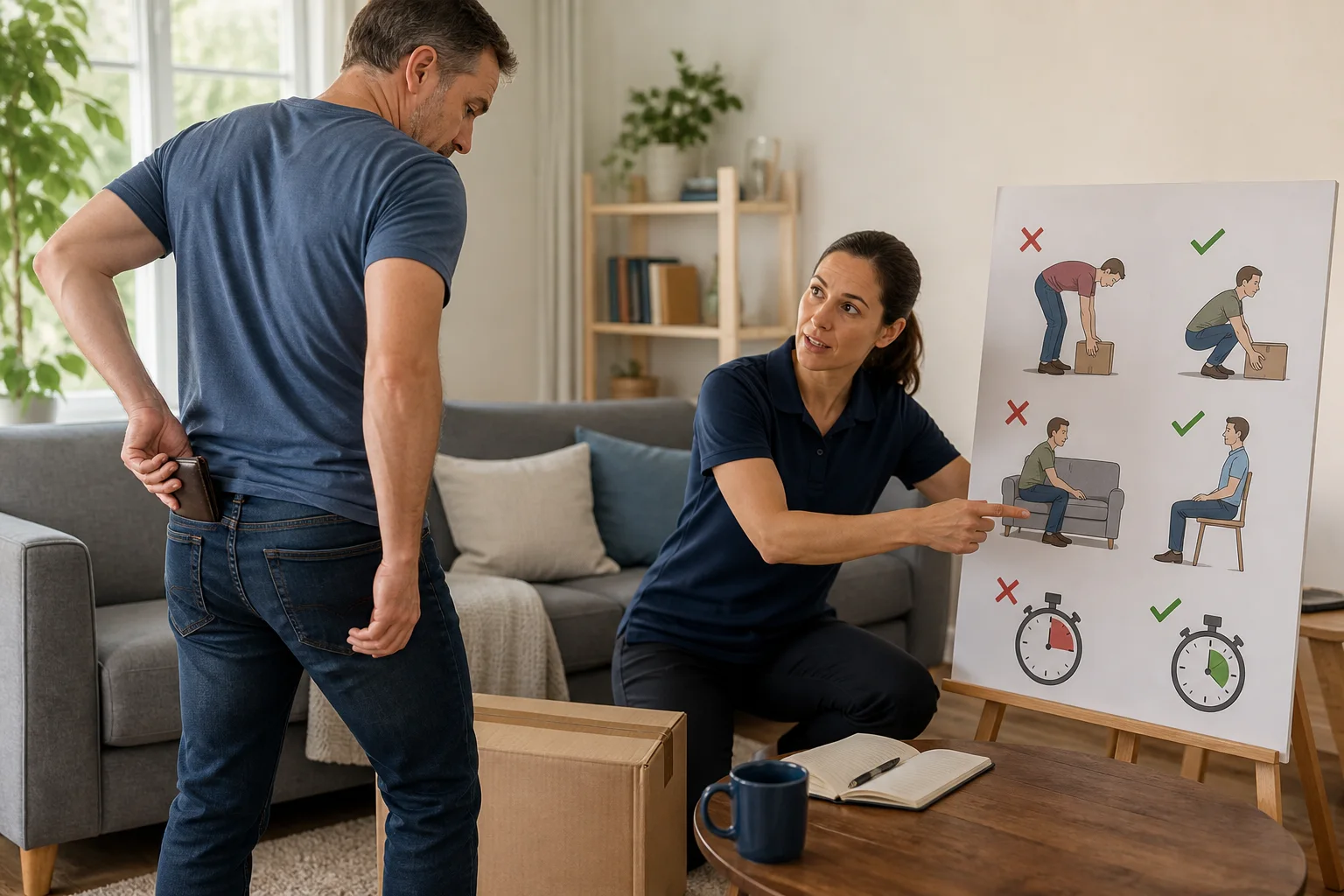
Lifting a heavy object with a rounded back places enormous shear force on the lumbar discs. A study in the Journal of Biomechanics found that flexion-based lifting can increase L4-L5 disc pressure by over 300% compared to a neutral spine lift. This sudden spike in pressure can cause an acute disc herniation or aggravate an existing bulge, triggering an immediate sciatica flare-up.
What to do: Always lift with a neutral spine—bend at the hips and knees, keep the load close to your body, and brace your core before initiating the lift. If an object is too heavy, get help or use equipment.
3. Excess Body Weight
Carrying extra weight—especially around the midsection—shifts your center of gravity forward, increasing the load on the lumbar spine. Research in Obesity Reviews found that individuals with a BMI over 30 have a 33% higher risk of developing sciatica compared to those at a healthy weight. Each additional kilogram of body weight adds roughly four kilograms of force to the lumbar spine during daily activities.
What to do: Even a modest weight reduction of 5 to 10% of body weight has been shown to meaningfully reduce spinal loading and symptom severity.
4. Emotional and Psychological Stress
The connection between stress and sciatica is more direct than most people realize. Chronic stress elevates cortisol levels, increases systemic inflammation, and causes sustained contraction of the paraspinal and piriformis muscles—all of which can irritate the sciatic nerve. Research in Pain Medicine has documented that patients with high perceived stress scores experience more frequent and more severe sciatica episodes.
What to do: Incorporate daily stress-management practices such as diaphragmatic breathing, progressive muscle relaxation, or mindfulness meditation. Even 10 minutes a day can lower baseline muscle tension.
5. Sudden or Repetitive Twisting Movements
Rotational forces on the lumbar spine—particularly when combined with flexion or loading—are a common acute trigger. Activities like golf, tennis, shoveling snow, or quickly turning to reach something behind you can create asymmetric stress on the intervertebral discs and facet joints.
What to do: When you need to turn, rotate your entire body by pivoting your feet rather than twisting your spine. Warm up thoroughly before any sport or activity involving rotation.

6. Inactivity and Deconditioning
Bed rest used to be standard advice for sciatica. We now know this is counterproductive. A landmark study in the New England Journal of Medicine demonstrated that patients who remained active recovered faster than those prescribed bed rest. Prolonged inactivity weakens the core and gluteal muscles that stabilize the spine, leading to greater disc loading and nerve compression during everyday movements.
What to do: Stay as active as your pain allows. Gentle walking, swimming, and targeted sciatica-specific exercises are among the most effective strategies for both acute management and long-term prevention.
7. Poor Sleep Posture and an Unsupportive Mattress
You spend roughly a third of your life in bed. If your sleeping position or mattress forces your spine into misalignment for hours at a time, you can wake up in the middle of a flare-up. Sleeping on your stomach is particularly problematic because it exaggerates lumbar lordosis and compresses the posterior spinal structures.
Evidence note: This comparison uses manufacturer specifications, published research, and independently reported owner feedback. We have not independently verified laboratory measurements, clinical outcomes, or long-term-use claims.
8. Cold Temperatures and Weather Changes
While the evidence is largely anecdotal, many patients report worsening symptoms during cold or damp weather. The proposed mechanism involves cold-induced vasoconstriction (reduced blood flow to soft tissues), increased muscle stiffness, and changes in barometric pressure affecting joint capsules and nerve sensitivity.
What to do: Keep your lower back and legs warm during cold months. Layer clothing, use a heating pad before activity, and maintain your stretching routine even when the weather discourages movement.
9. Wearing Improper Footwear
High heels tilt the pelvis forward and increase lumbar lordosis, compressing the posterior spinal elements. Flat shoes with zero support—like worn-out sneakers or flip-flops—fail to absorb impact, transmitting ground reaction forces directly up through the spine. Both extremes can contribute to sciatica flare-ups.
What to do: Choose shoes with moderate arch support, cushioned soles, and a low heel-to-toe drop. If you must wear heels for an event, limit the duration and stretch your hip flexors and calves afterward.
10. Smoking
Nicotine constricts blood vessels and reduces nutrient delivery to the intervertebral discs, accelerating disc degeneration. Smokers also tend to have higher levels of systemic inflammation. A meta-analysis in The American Journal of Medicine found that current smokers have a 1.46 times higher risk of lumbar radiculopathy compared to non-smokers.
What to do: If you smoke, quitting is one of the most impactful things you can do for your spinal health. Speak to your doctor about cessation programs and support.
Early Warning Signs of a Sciatica Flare-Up
One of the most valuable things you can learn is how to detect a flare-up before it fully develops. In my experience, patients who catch the early warning signs and intervene immediately can often prevent a minor irritation from becoming a debilitating episode.
Physical Warning Signs
- Dull, low-grade ache in the lower back or buttock — This often appears 12 to 48 hours before a full flare-up. It may feel like generalized stiffness rather than sharp pain.
- Mild tingling or "pins and needles" in the leg — A subtle electrical sensation, often in the back of the thigh or calf, that comes and goes.
- Increased hamstring or piriformis tightness — If your hamstrings suddenly feel much tighter than usual without a change in activity, your sciatic nerve may be becoming irritated.
- Asymmetric muscle fatigue — One leg feeling noticeably weaker or more fatigued during routine activities like climbing stairs.
- Subtle changes in gait — You may unconsciously start favoring one leg or shifting your weight to one side.
Situational Warning Signs
- You've been sitting for longer than usual over the past few days
- You recently performed an unaccustomed physical activity (moving furniture, gardening, a new exercise)
- Your stress levels have been elevated
- You've been sleeping poorly or in an unusual position
- The weather has turned cold and you've been less active

The Flare-Up Timeline
Understanding the typical progression of a flare-up helps you intervene at the right stage:
| Stage | Timeline | Symptoms | Best Action |
|---|---|---|---|
| Pre-flare | 1–2 days before | Mild stiffness, subtle tingling | Gentle stretching, posture correction, stress management |
| Early flare | Day 1–3 | Moderate pain, noticeable tingling, guarding | Anti-inflammatory strategies, gentle movement, avoid triggers |
| Peak flare | Day 3–7 | Severe pain, numbness, difficulty with daily tasks | Guided exercise, pain management, consider professional help |
| Resolution | Week 1–4 | Gradual pain reduction, function returning | Progressive exercise, address root cause, prevention planning |
How Your Daily Habits Silently Fuel Flare-Ups
Many sciatica flare-up triggers are not single dramatic events but the accumulation of daily habits that slowly increase the load on your sciatic nerve until a tipping point is reached.
The "Creep" Effect
Spinal tissues exhibit a property called viscoelastic creep—under sustained load, ligaments and discs gradually deform. After 20 minutes of sitting with poor posture, your lumbar ligaments have elongated enough that they can no longer effectively stabilize the spine. Your discs are now bearing more load, and the margin of safety before nerve compression narrows significantly.
This is why many people report that their worst flare-ups don't happen during obviously risky activities—they happen when they lean forward to pick up a pen after sitting at their desk for three hours. The desk work was the real trigger; the pen was just the last straw.
The Inflammation Cycle
Poor sleep, high stress, processed food, and inactivity all contribute to elevated systemic inflammation. Inflammatory cytokines like TNF-alpha and IL-6 sensitize nerve tissue, lowering the threshold at which the sciatic nerve fires pain signals. You might tolerate a moderately bulging disc just fine when your inflammation levels are low—but when they spike, that same disc suddenly produces excruciating pain.
Muscle Imbalance Patterns
Weak glutes combined with tight hip flexors—a pattern sometimes called lower crossed syndrome—alter pelvic mechanics in a way that increases stress on the lumbar spine. This is incredibly common among people who sit for work and don't perform targeted strengthening exercises. Over time, this imbalance can make you vulnerable to flare-ups from activities that wouldn't otherwise be problematic.
Prevention Strategies That Actually Work
Prevention is not about avoiding all activity—it's about building resilience so your spine can handle the demands of daily life without crossing the threshold into pain.
Move Regularly and Strategically
The single most evidence-supported prevention strategy for sciatica is consistent, targeted exercise. Research in the British Journal of Sports Medicine shows that exercise programs combining core stabilization, nerve mobilization, and aerobic conditioning reduce sciatica recurrence by up to 45%.
Key exercises include:
- Bird-dog — Builds core stability and teaches spinal neutral
- Glute bridges — Activates the gluteus maximus to support the pelvis
- Sciatic nerve glides — Gently mobilizes the nerve to reduce adhesions and sensitivity
- Cat-cow stretches — Promotes lumbar mobility in a controlled range
- Walking — Low-impact aerobic activity that improves circulation to spinal tissues
For a detailed, physiotherapist-designed program, see our complete guide to sciatica exercises.

Optimize Your Sitting Environment
If you sit for work, your chair setup matters enormously. Key principles:
- Feet flat on the floor, knees at approximately 90 degrees
- Lumbar support that maintains the natural curve of your lower back
- Screen at eye level to prevent forward head posture (which cascades into lumbar flexion)
- Regular breaks every 30 to 45 minutes—set a timer if needed
A pressure-relieving seat cushion can make a significant difference, particularly if your office chair doesn't provide adequate support.
Prioritize Sleep Quality
Poor sleep both triggers flare-ups and reduces your capacity to recover from them. Prioritize:
- Sleeping on your side with a pillow between your knees, or on your back with a pillow under your knees
- A medium-firm mattress that supports spinal alignment
- Consistent sleep and wake times
- A cool, dark sleep environment
Manage Stress Proactively
Don't wait until you're overwhelmed. Build stress management into your daily routine:
- Diaphragmatic breathing: 5 minutes, twice daily
- Progressive muscle relaxation: Systematically tense and release muscle groups to reduce baseline tension
- Regular physical activity: Exercise is one of the most effective stress reducers available
- Social connection: Isolation amplifies stress and pain perception
Maintain a Healthy Weight
Work with your doctor or a registered dietitian if needed. Focus on sustainable changes rather than crash diets. Even a 5% reduction in body weight can meaningfully reduce spinal loading.
Stop Smoking
If you smoke, talk to your healthcare provider about cessation support. The improvements in disc nutrition and inflammation levels begin within weeks of quitting.

Products That Help Manage and Prevent Flare-Ups
Evidence note: This comparison uses manufacturer specifications, published research, and independently reported owner feedback. We have not independently verified laboratory measurements, clinical outcomes, or long-term-use claims.
Seat Cushions
A quality seat cushion redistributes pressure away from the ischial tuberosities and coccyx, reducing direct compression on the sciatic nerve. Look for memory foam or gel-infused options with a coccyx cutout.
Recommended: Everlasting Comfort Seat Cushion — Memory foam with a ventilated design that holds its shape. One of the most popular options among our readers.
For a complete comparison, see our best seat cushions for sciatica in 2026 guide.
Lumbar Support Pillows
If your chair doesn't have built-in lumbar support, an add-on pillow can help maintain the natural lordotic curve while sitting.
Recommended: Qutool Lumbar Support Pillow — Adjustable memory foam design that works with most office chairs and car seats.
Heating Pads
Heat increases blood flow to tight muscles and promotes relaxation. It's particularly useful during the pre-flare and early flare stages.
Recommended: Mighty Bliss Electric Heating Pad — Large size covers the entire lower back, with multiple heat settings and auto-shutoff for safety.
Foam Rollers
Self-myofascial release with a foam roller can help reduce piriformis and hamstring tension, two common contributors to sciatic nerve irritation.
Recommended: TriggerPoint GRID Foam Roller — Durable construction with a textured surface for targeted pressure.
When to See a Doctor
Most sciatica flare-ups resolve on their own within a few weeks with conservative management. However, certain symptoms require prompt medical attention.
Seek Immediate Medical Care If You Experience:
- Loss of bladder or bowel control — This may indicate cauda equina syndrome, a surgical emergency
- Progressive weakness in one or both legs — Suggests significant nerve compression
- Numbness in the saddle area (inner thighs, buttocks, genitals) — Another red flag for cauda equina syndrome
- Severe pain unresponsive to any position change or medication
- Fever combined with back pain — May indicate spinal infection
See Your Doctor Within a Few Days If:
- Pain persists beyond four to six weeks despite conservative care
- Symptoms are getting progressively worse rather than better
- Pain is severe enough to significantly limit your daily activities
- You experience new or worsening numbness or tingling
- Flare-ups are becoming more frequent despite prevention efforts
Frequently Asked Questions
What is the most common trigger for a sciatica flare-up?
Prolonged sitting is the most frequently reported trigger for sciatica flare-ups. Sitting for extended periods—especially with poor posture—increases intradiscal pressure by up to 40% compared to standing, compressing the sciatic nerve roots and provoking pain, numbness, or tingling down the leg. Using a supportive seat cushion and taking regular movement breaks are two of the simplest ways to mitigate this trigger.
How long does a sciatica flare-up typically last?
Most acute sciatica flare-ups last between one and four weeks, though the duration varies depending on the underlying cause, severity, and how quickly appropriate management begins. Mild flare-ups triggered by temporary factors like a day of heavy lifting may resolve within a few days, while flare-ups related to disc herniations can persist for several weeks. Staying active with gentle exercises tends to speed recovery compared to bed rest.
Can stress cause a sciatica flare-up?
Yes, psychological stress can contribute to sciatica flare-ups. Stress triggers the release of cortisol and inflammatory cytokines, increases muscle tension (particularly in the lower back and piriformis), and lowers your pain threshold. Chronic stress can create a feedback loop where pain causes more stress, which worsens the pain. Daily stress management practices like diaphragmatic breathing and progressive muscle relaxation can meaningfully reduce stress-related flare-ups.
What are the early warning signs that a sciatica flare-up is coming?
Early warning signs include a dull ache or stiffness in the lower back, mild tingling or numbness in the buttock or thigh, increased tightness in the hamstrings or piriformis muscle, a subtle change in gait or posture, and difficulty getting comfortable while sitting or lying down. Recognizing these signals early allows you to intervene with gentle stretching, posture correction, and trigger avoidance before a full flare-up develops.
Can weather changes trigger sciatica?
Some people report increased sciatica symptoms during cold, damp weather or barometric pressure changes. While clinical evidence is limited, cold temperatures can increase muscle stiffness and reduce blood flow to soft tissues, potentially aggravating an already irritated sciatic nerve. Keeping warm, staying active, stretching regularly, and considering a heating pad during cold months may help reduce weather-related flare-ups.
Is walking good or bad during a sciatica flare-up?
Walking is generally beneficial during a sciatica flare-up, provided the pain is manageable. Walking promotes blood flow to spinal tissues, gently mobilizes the sciatic nerve, and prevents the deconditioning that comes with bed rest. Start with short, flat walks (10 to 15 minutes) and gradually increase as tolerated. If walking significantly worsens your symptoms, reduce the duration and consult a healthcare provider.
Can sciatica flare-ups be completely prevented?
While it may not be possible to prevent every flare-up entirely, most people can dramatically reduce their frequency and severity through consistent exercise, ergonomic optimization, stress management, and trigger awareness. In clinical practice, patients who follow a structured prevention program typically see a 40 to 60% reduction in flare-up frequency within the first three months.
Sources and Methodology
This article is based on current clinical evidence, peer-reviewed research, and 18 years of direct clinical experience treating patients with sciatica and lumbar radiculopathy. Key sources include:
- Nachemson, A.L. (1981). "Disc pressure measurements." Spine, 6(1), 93–97. — Foundational research on intradiscal pressure in various postures.
- Deyo, R.A., Diehl, A.K., & Rosenthal, M. (1986). "How many days of bed rest for acute low back pain?" New England Journal of Medicine, 315(17), 1064–1070. — Landmark study on activity vs. bed rest.
- Shiri, R., Lallukka, T., Karppinen, J., & Viikari-Juntura, E. (2014). "Obesity as a risk factor for sciatica: a meta-analysis." American Journal of Epidemiology, 179(8), 929–937.
- Pinheiro, M.B., et al. (2015). "Symptoms of depression and risk of low back pain: a prospective co-twin study." Clinical Journal of Pain, 31(12), 1067–1075.
- Shiri, R., & Falah-Hassani, K. (2016). "The effect of smoking on the risk of sciatica: a meta-analysis." The American Journal of Medicine, 129(1), 64–73.
- Oliveira, C.B., et al. (2018). "Clinical practice guidelines for the management of non-specific low back pain in primary care: an updated overview." European Spine Journal, 27(11), 2791–2803.
- National Institute for Health and Care Excellence (NICE). (2020). "Low back pain and sciatica in over 16s: assessment and management." NICE guideline NG59.
Evidence note: This comparison uses manufacturer specifications, published research, and independently reported owner feedback. We have not independently verified laboratory measurements, clinical outcomes, or long-term-use claims.
Medical Disclaimer
The information provided in this article is for educational and informational purposes only and is not intended as a substitute for professional medical advice, diagnosis, or treatment. Always seek the advice of a qualified healthcare provider with any questions you may have regarding a medical condition. Never disregard professional medical advice or delay in seeking it because of something you have read on this website.
If you are experiencing severe symptoms, progressive neurological deficits, or loss of bladder/bowel control, seek emergency medical attention immediately.
Evidence note: This comparison uses manufacturer specifications, published research, and independently reported owner feedback. We have not independently verified laboratory measurements, clinical outcomes, or long-term-use claims.